Jasmine in Bloom
Strategically alternate between placing the trellis and flowering the vine.
Strategically alternate between placing the trellis and flowering the vine.

Claim the most credit as you map the surface of a new planet.
Piece together a starscape so grand, you'll have to score it in three different sections.
A unique card-based area majority/set-collector/push your luck game that has different scoring conditions each time you play.
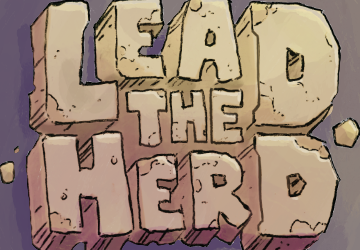
Guide three herds of cretaceous-era dinosaurs as they undertake a peril-fraught migration.
Draft cards and tokens to form the strongest guild of bounty hunters.
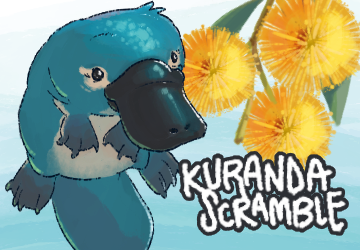
2 players map out the Daintree rainforest, moving the native animals along corridors to score points in this lightweight game.
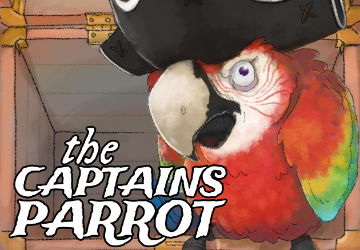
Up to four deckhands have to think quick as they try to rob the Captain under the watchful eye of his parrot.
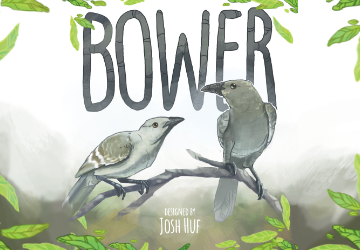
A path-finding pick-up and deliver game for 2.
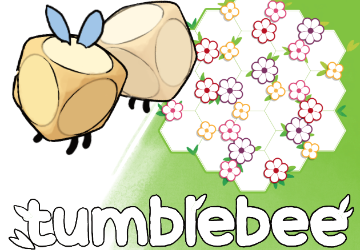
A 20 minute roll and write full of puzzly pollination and combo building.
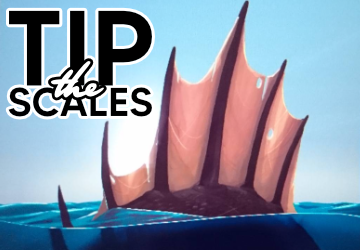
Spectators love this fishing tournament. Might that have something to do with the ravenous leviation that patrols the waters?
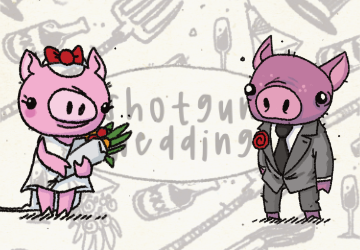
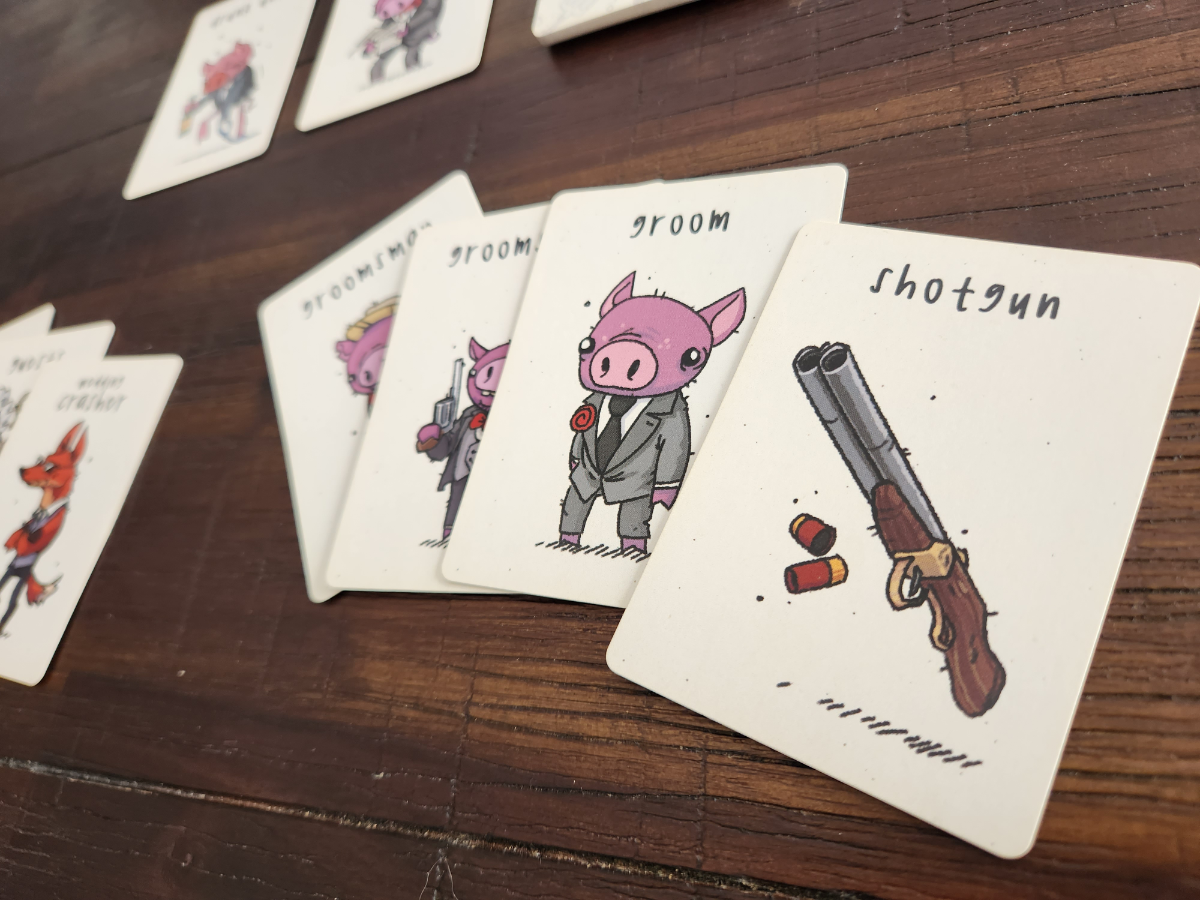
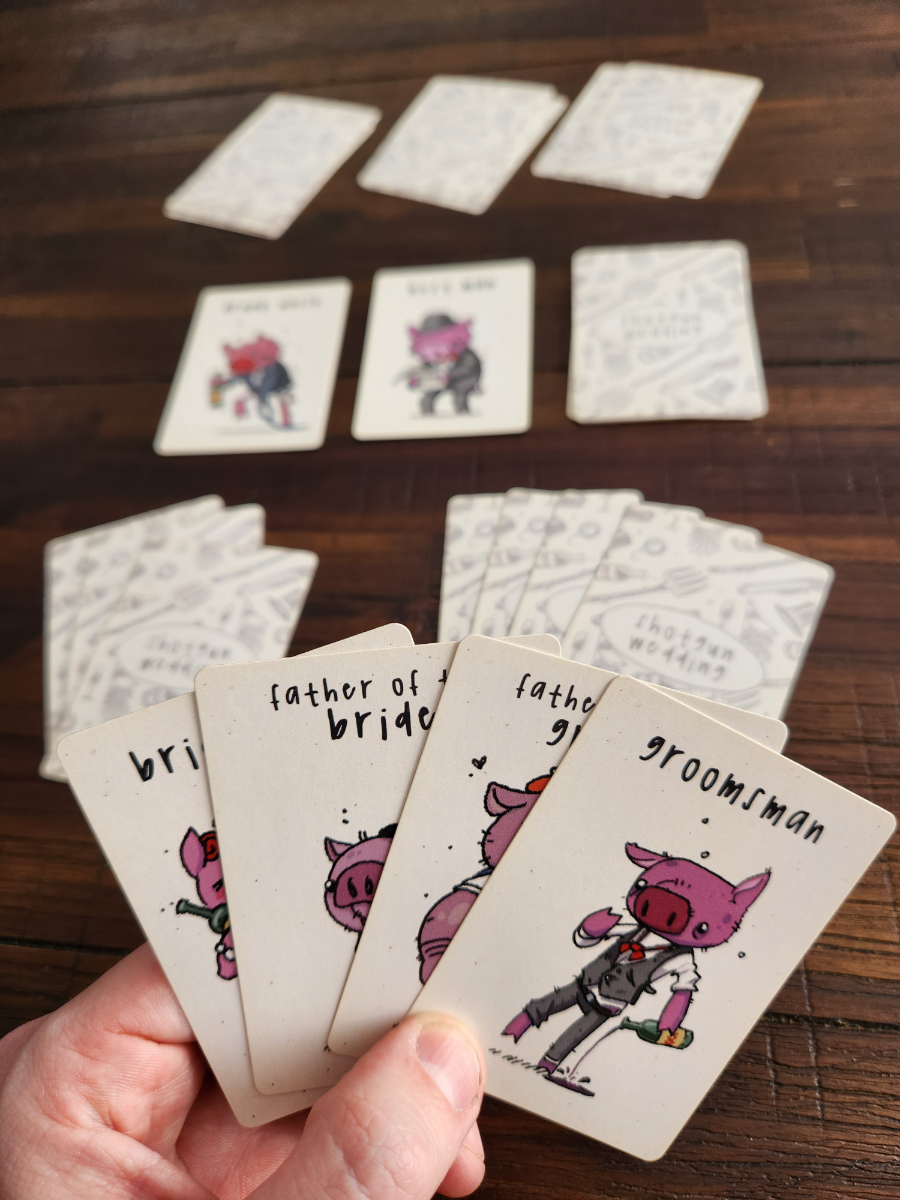
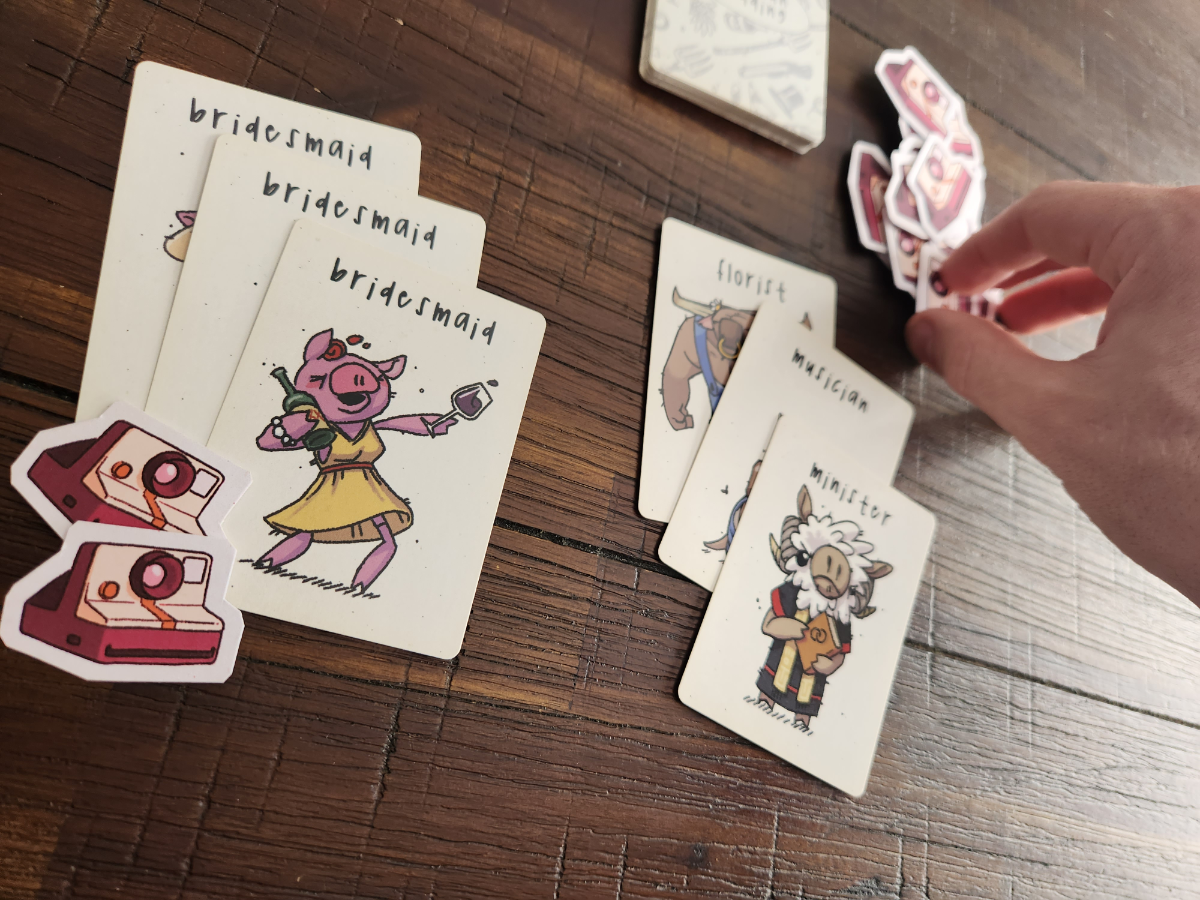
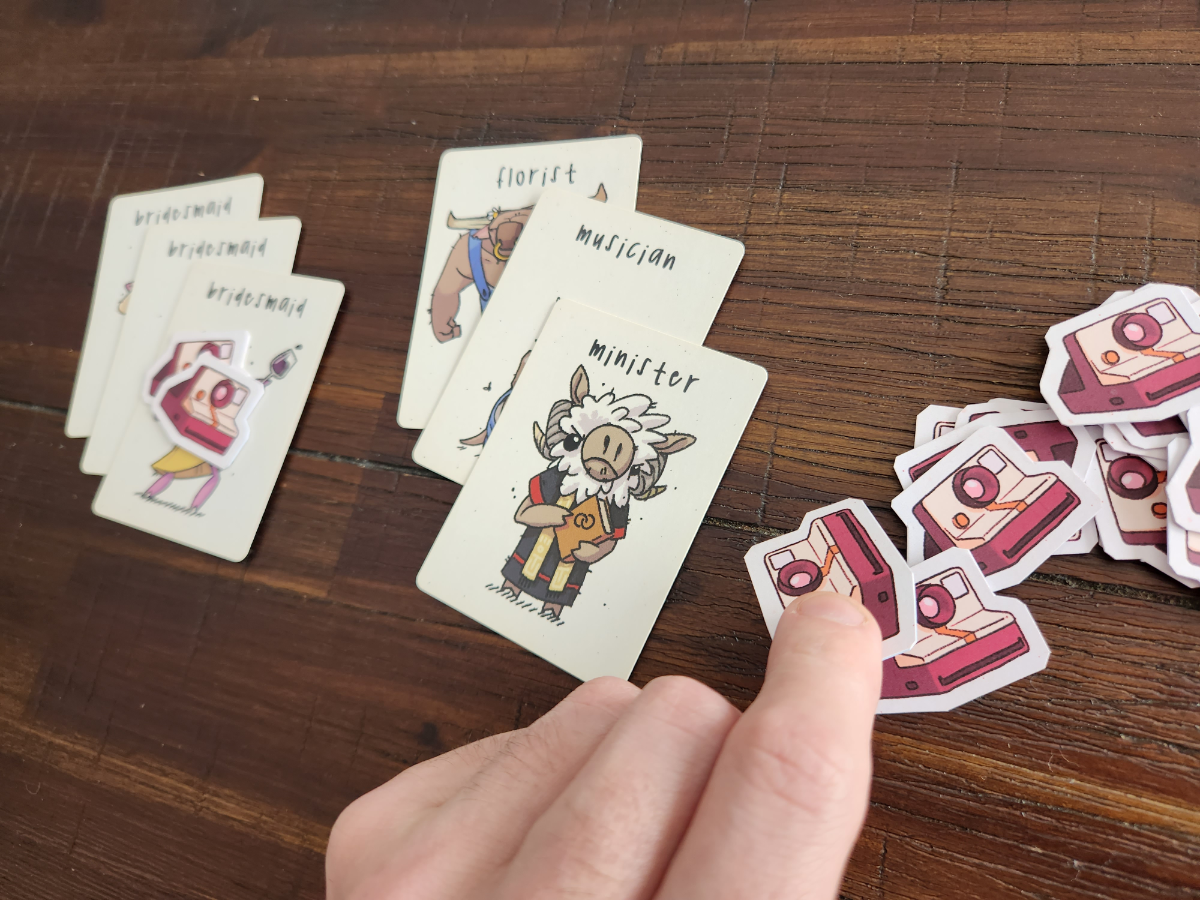
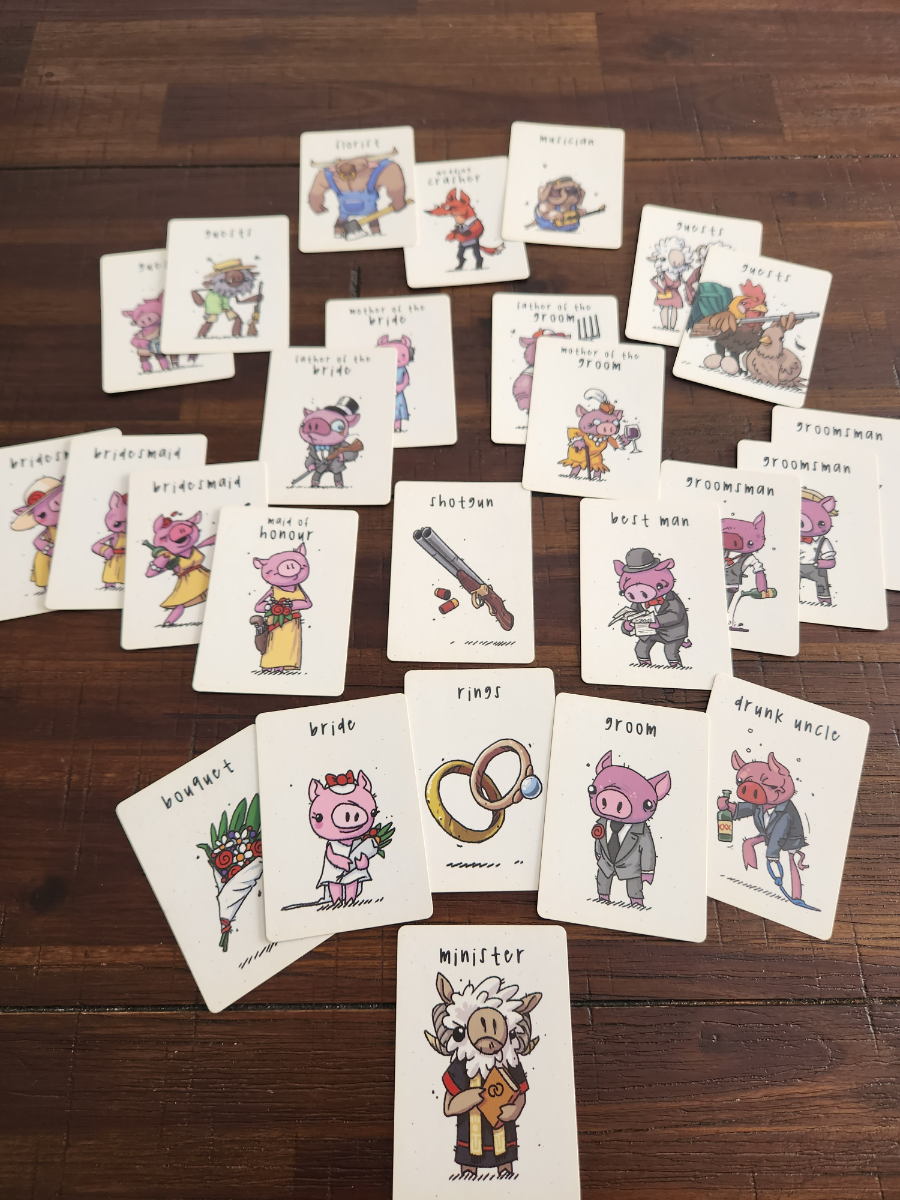
Keep the bride happy as you take photos of the wedding party.
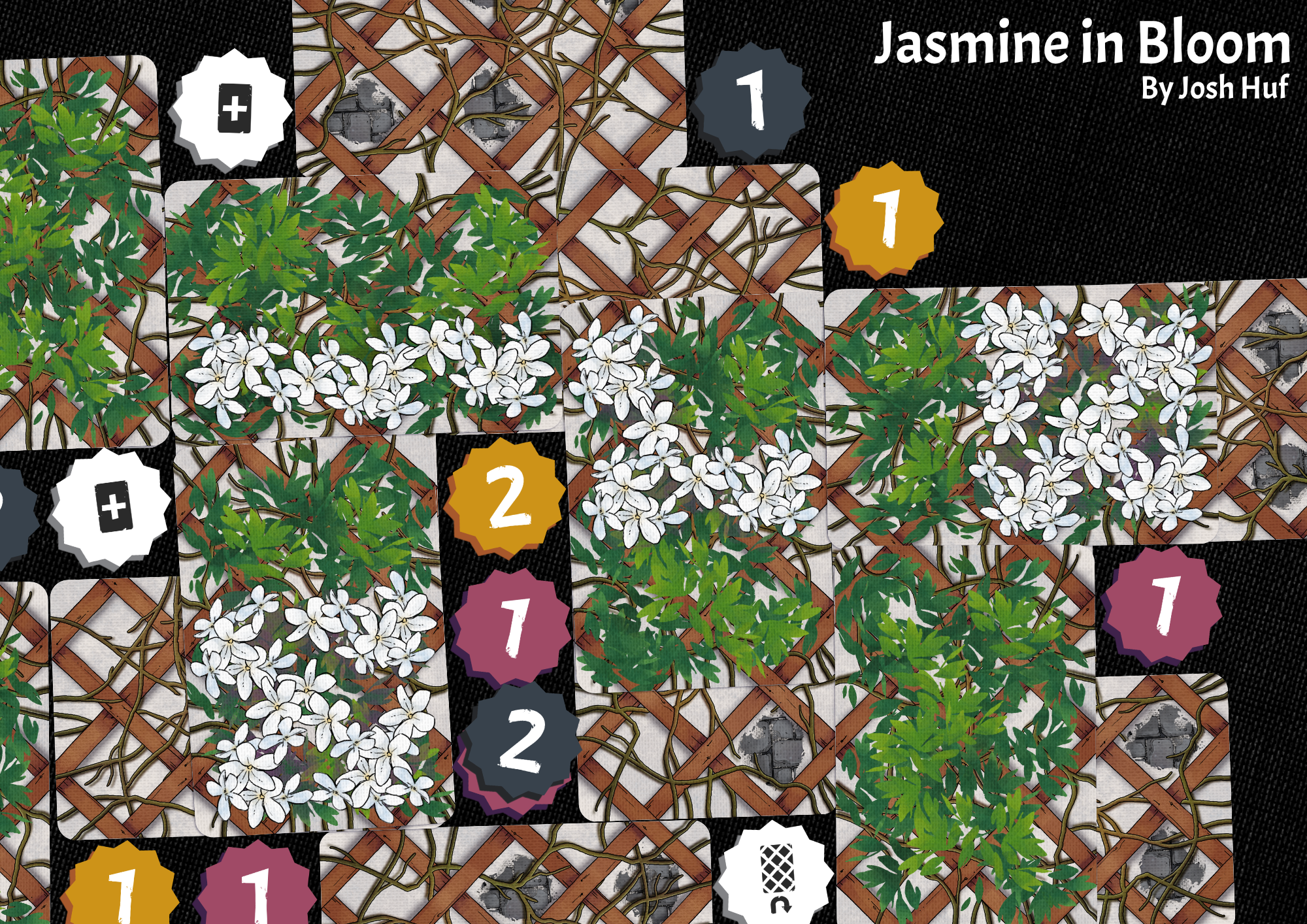
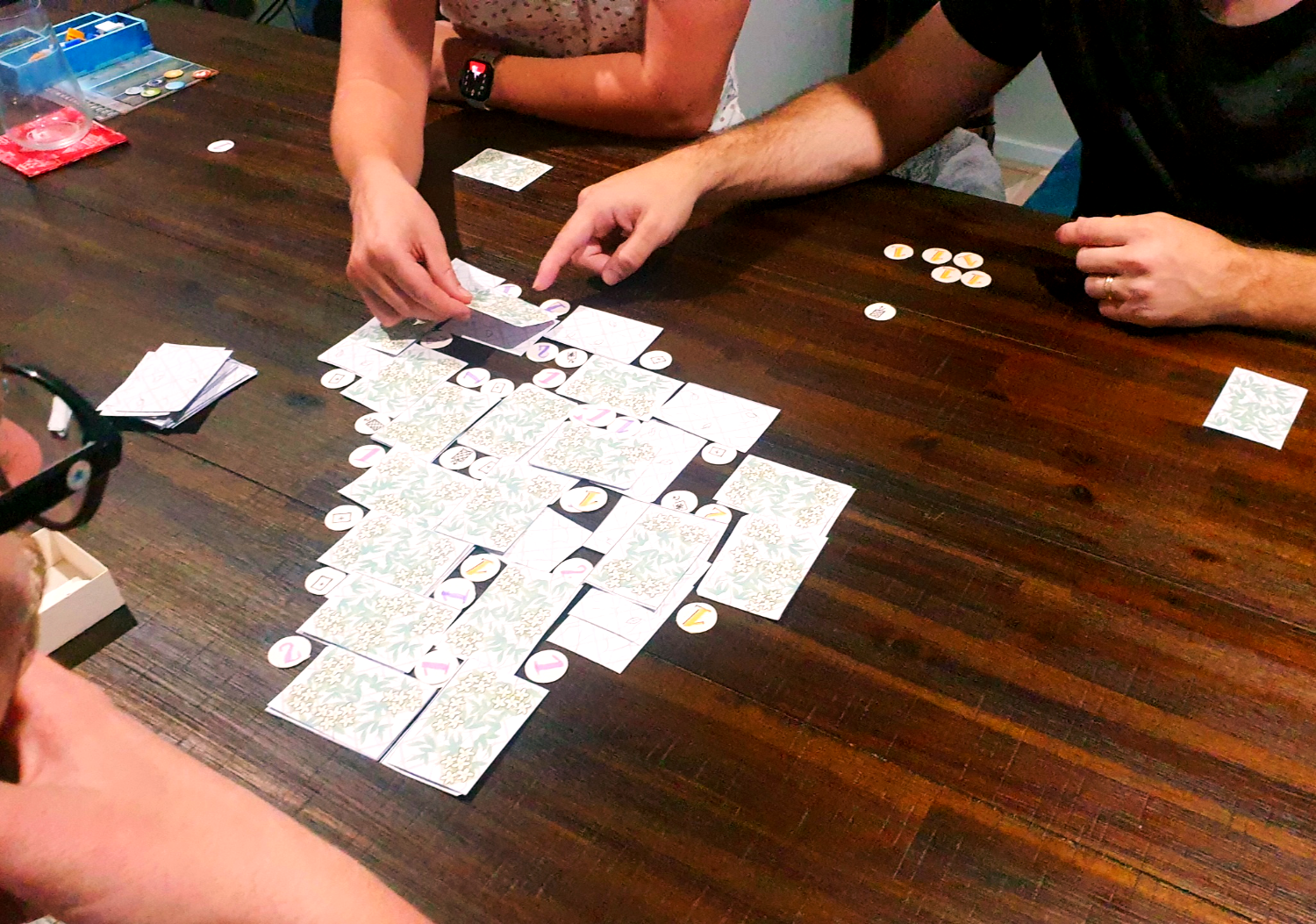
Jasmine in Bloom is a 2-4 player hand management/card placement game with abstract strategy vibes. The core gameplay revolves around two asynchronous phases, one for placing trellis (and their scoring tokens), the other blossoming the vine with flowers (which are effectively a score multiplier for nearby tokens). The game features 8 different scoring conditions as well as 8 different utility tokens, but each game will only feature a selected mix of 3 of each, for a huge amount of replayability with plenty of different strategies to explore.
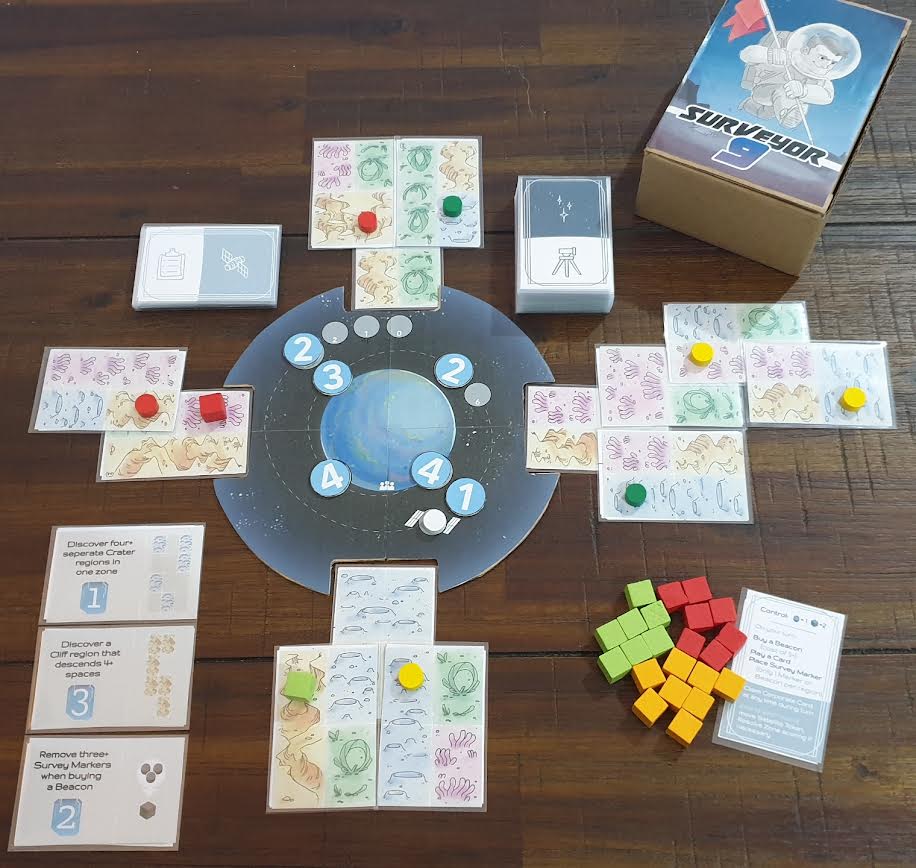
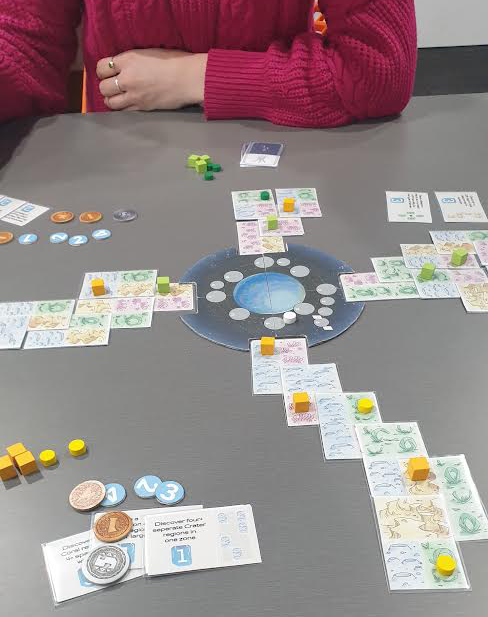
Surveyor 9 is a small box, 30 minute card-based area majority game. Up to four players fight for Credit as they map out the surface of a new planet. Place planet cards into one of four zones, forming regions of matching terrain types, before placing one of your survey markers to signify the work you've done. A Corporate Satellite is orbiting the planet awarding credit to the employee who is working the hardest, so time your efforts carefully to ensure you are earning the most. You can also spend your survey markers, removing them from the map and placing out a Corporate approved, industry standard Beacon! This not only awards you credit for every other survey marker in the zone, but looks great on your next performance review. Corporate is also willing to give out Credit for acheiving specific tasks throughout the game, so keep an eye out for any opportunity to go above and beyond.
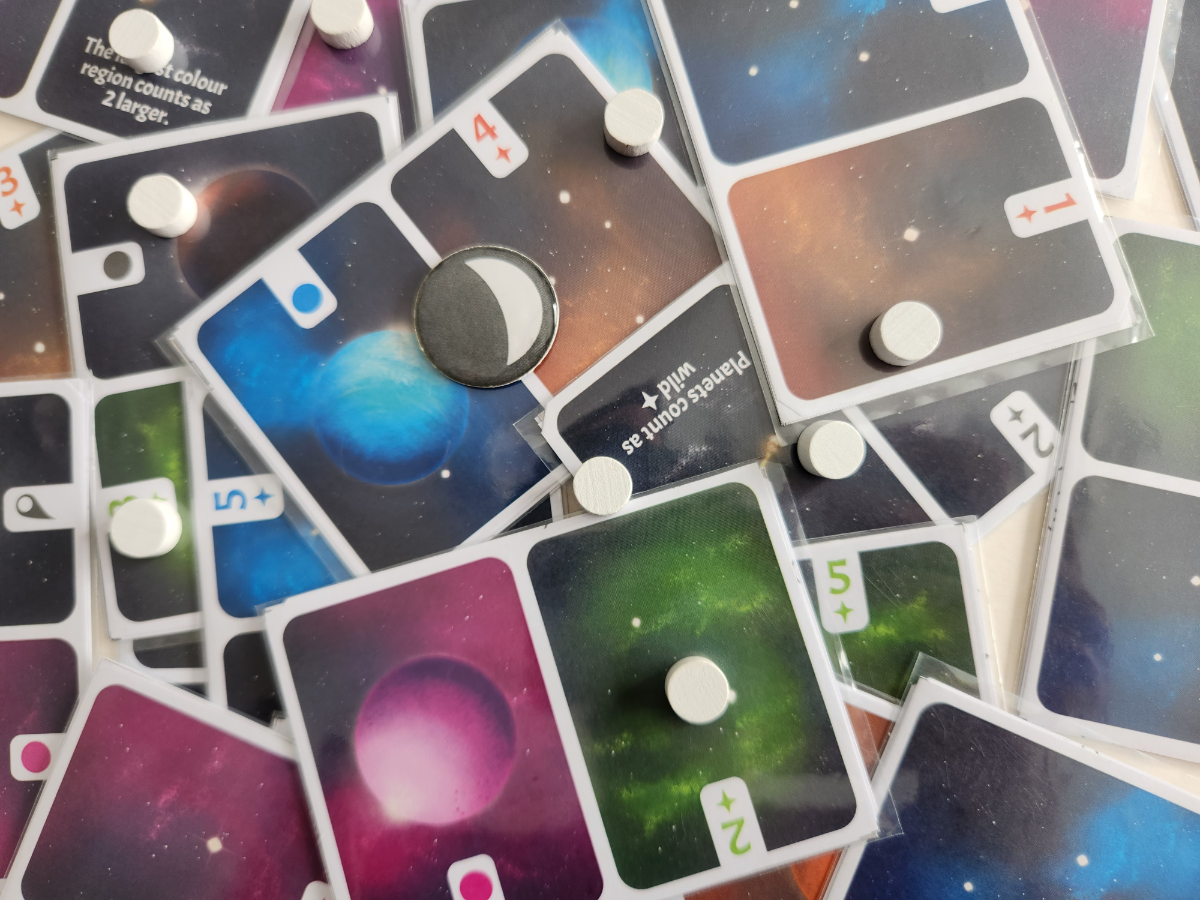
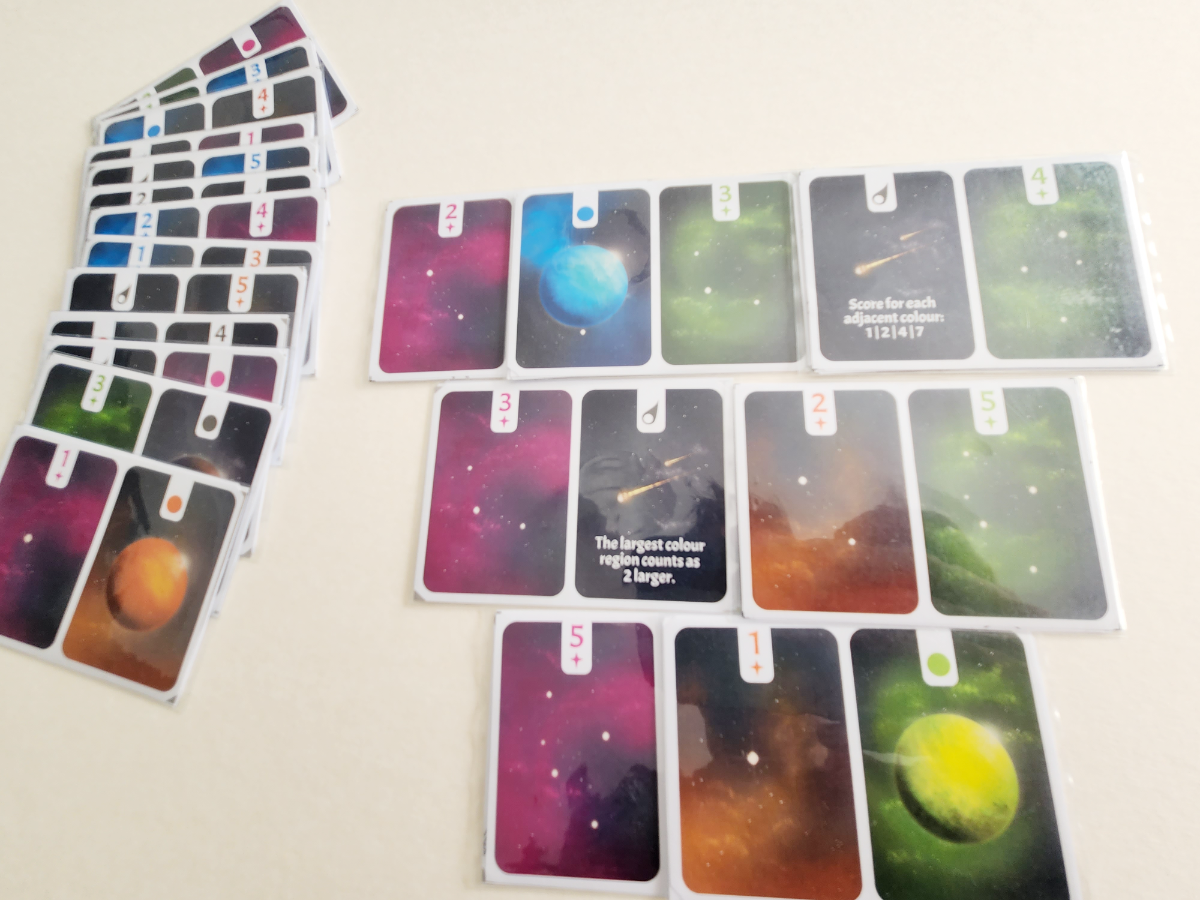
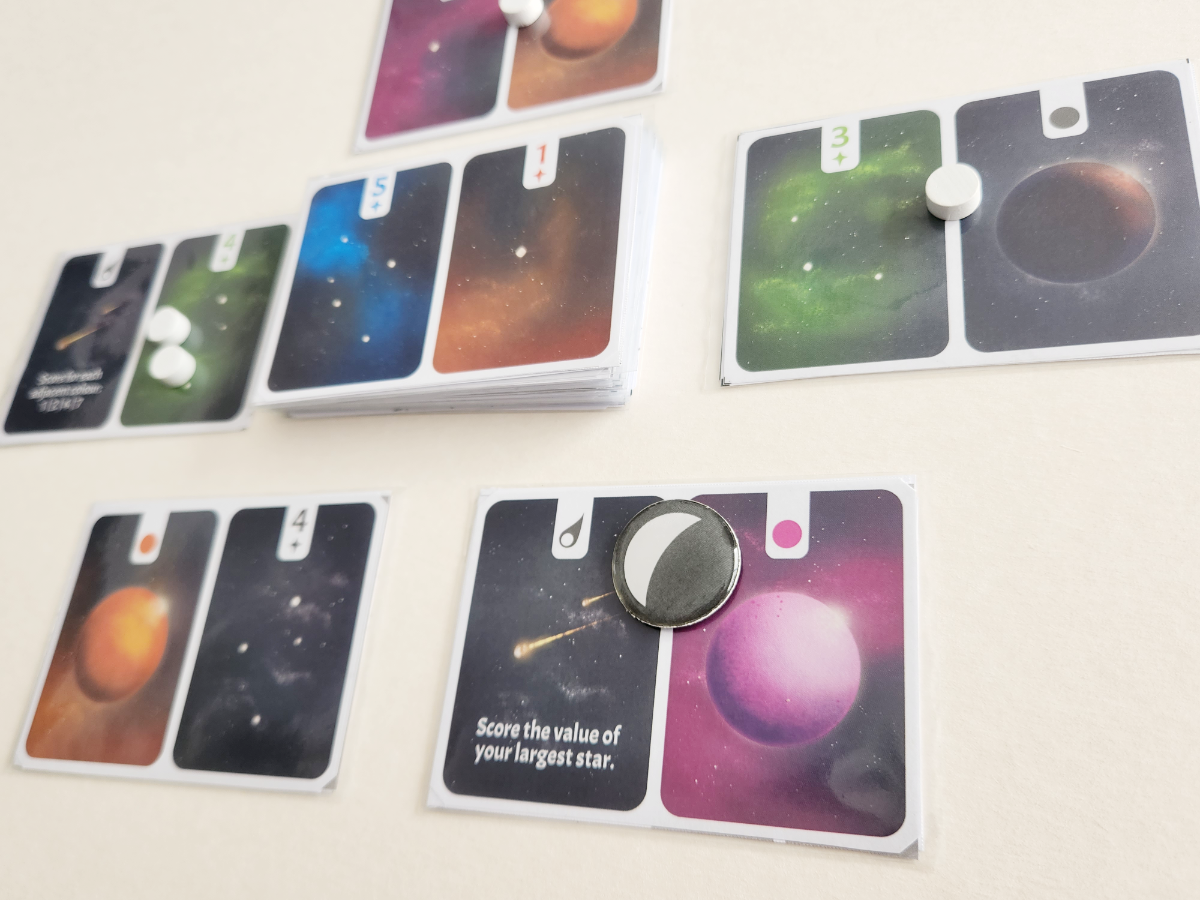
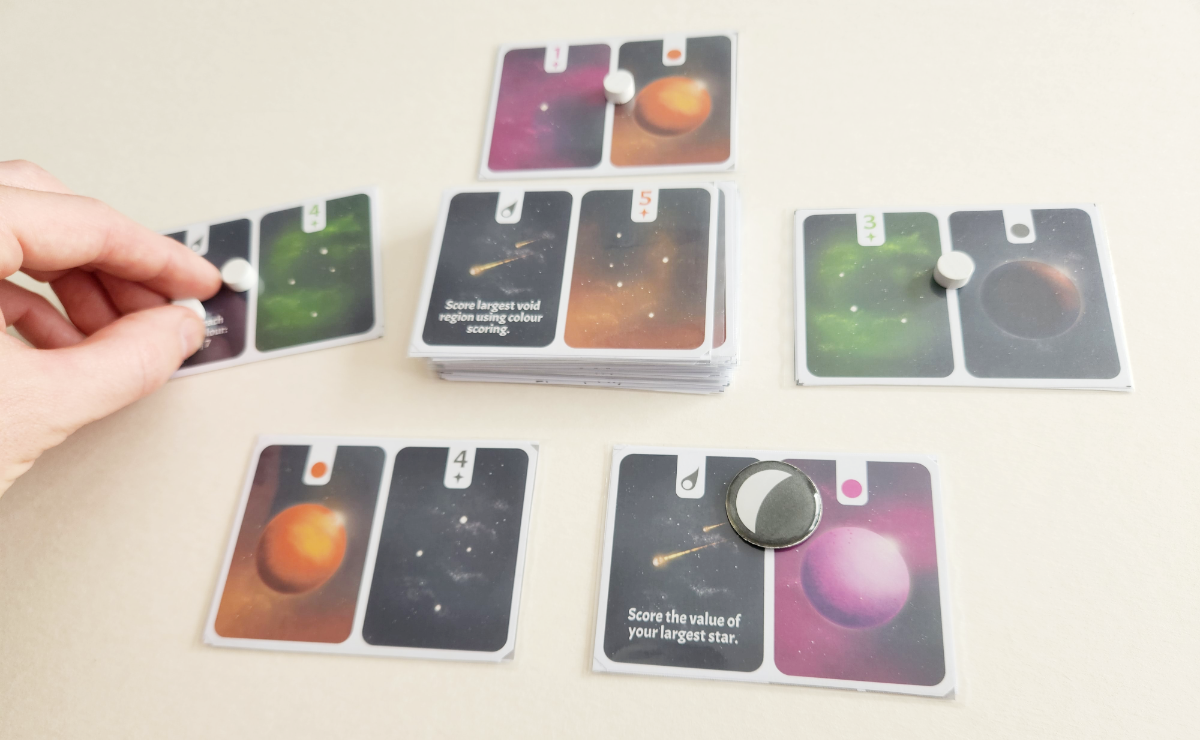
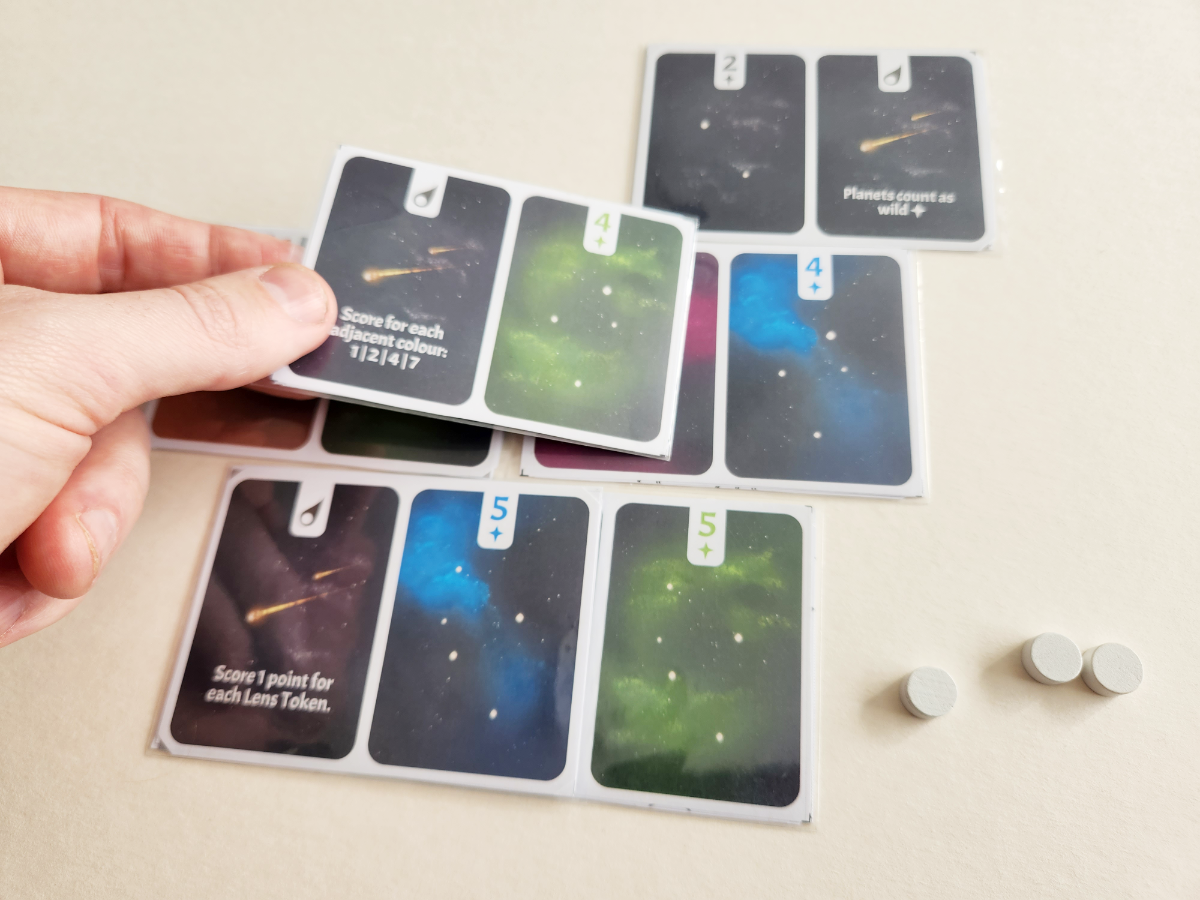
Stargazer is a tableau building game for 2 where each player builds out a section of the night sky by drafting and arranging double sided cards in front of them. Each card may have stars, planets, or special comets that offer additional scoring opportunities. The crux of the game lies in the scoring - each tableau is split into 3 overlapping scoring sections, so there are positions in the tableau that will score twice or even three times. Players will have to plan their card placement carefully to maximise their score at the end of the game. Worth noting that due to the nature of double-sided cards and the way in which players can tuck the cards into the tableau, Tabletop Simulator does not handle this game well.
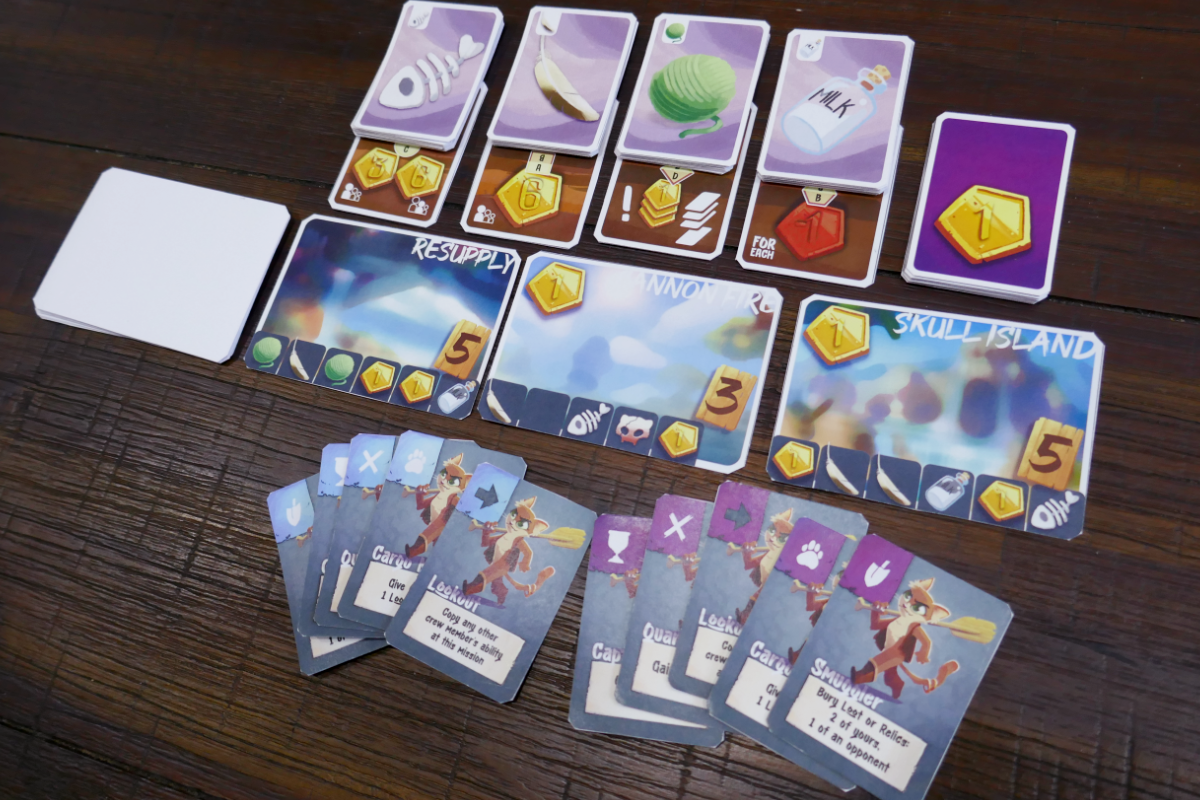
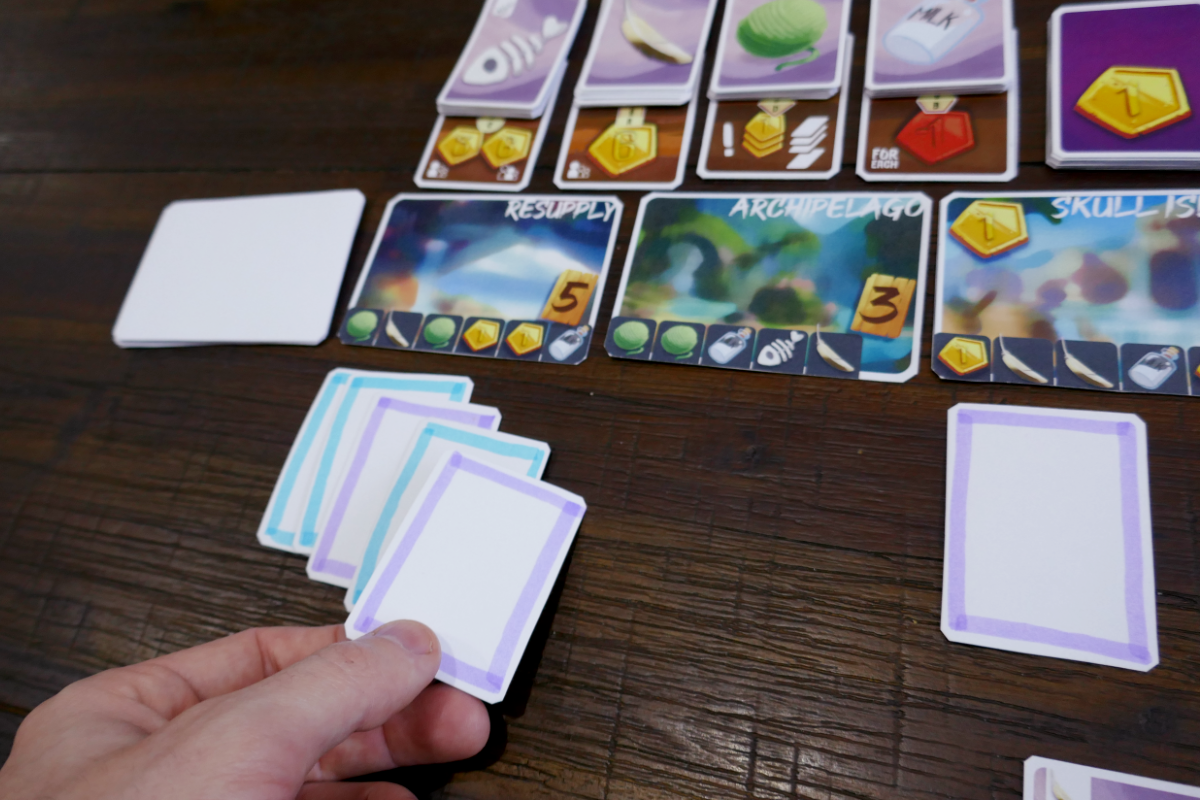
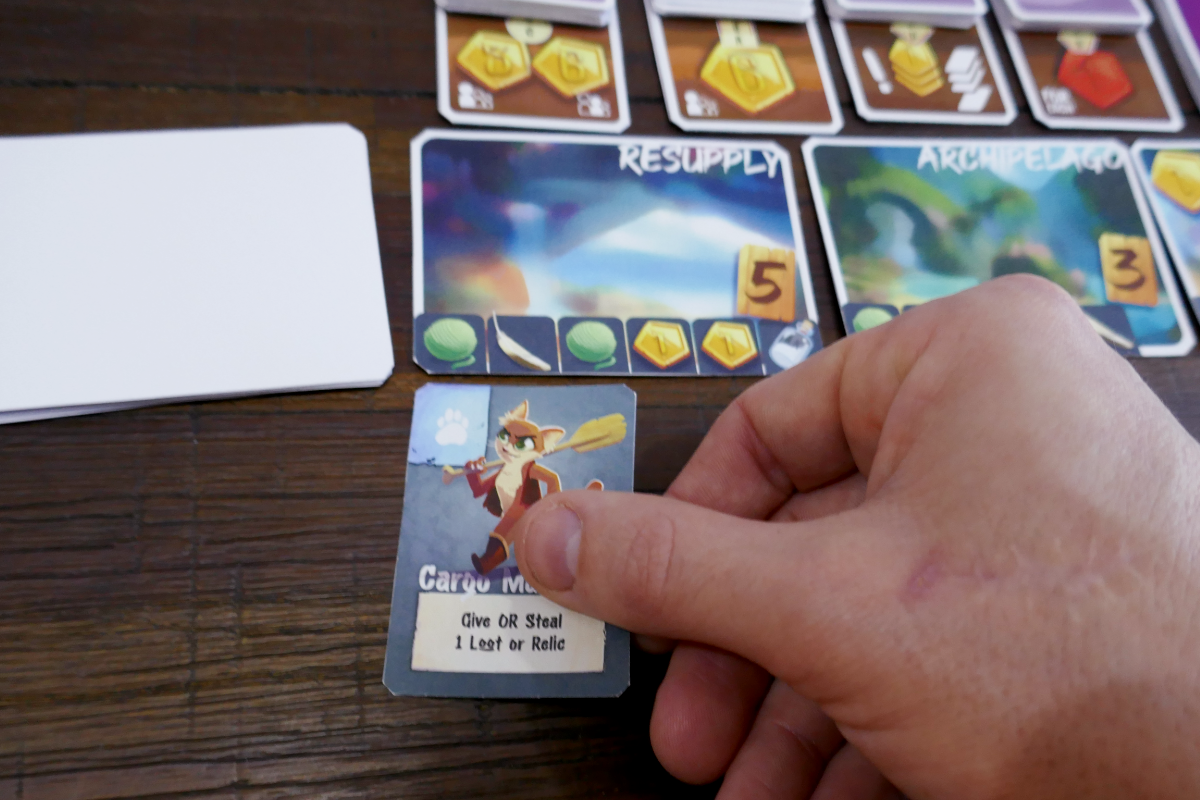
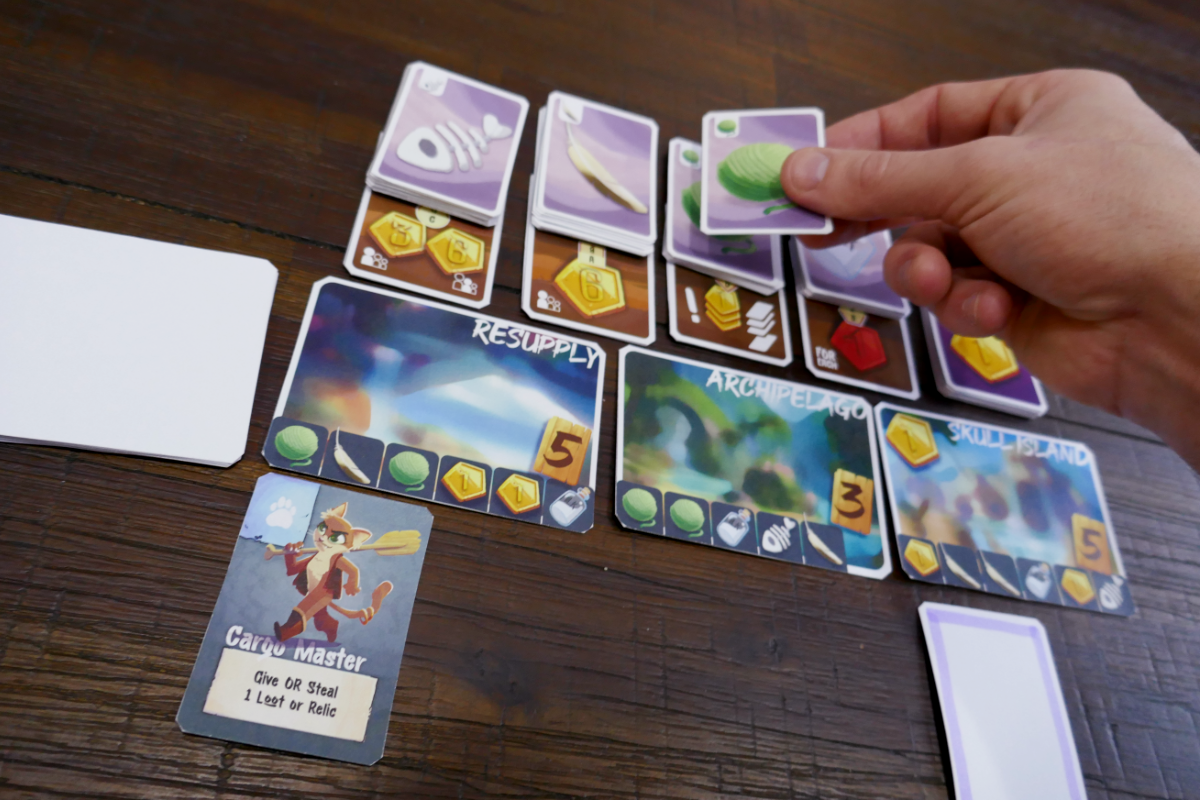
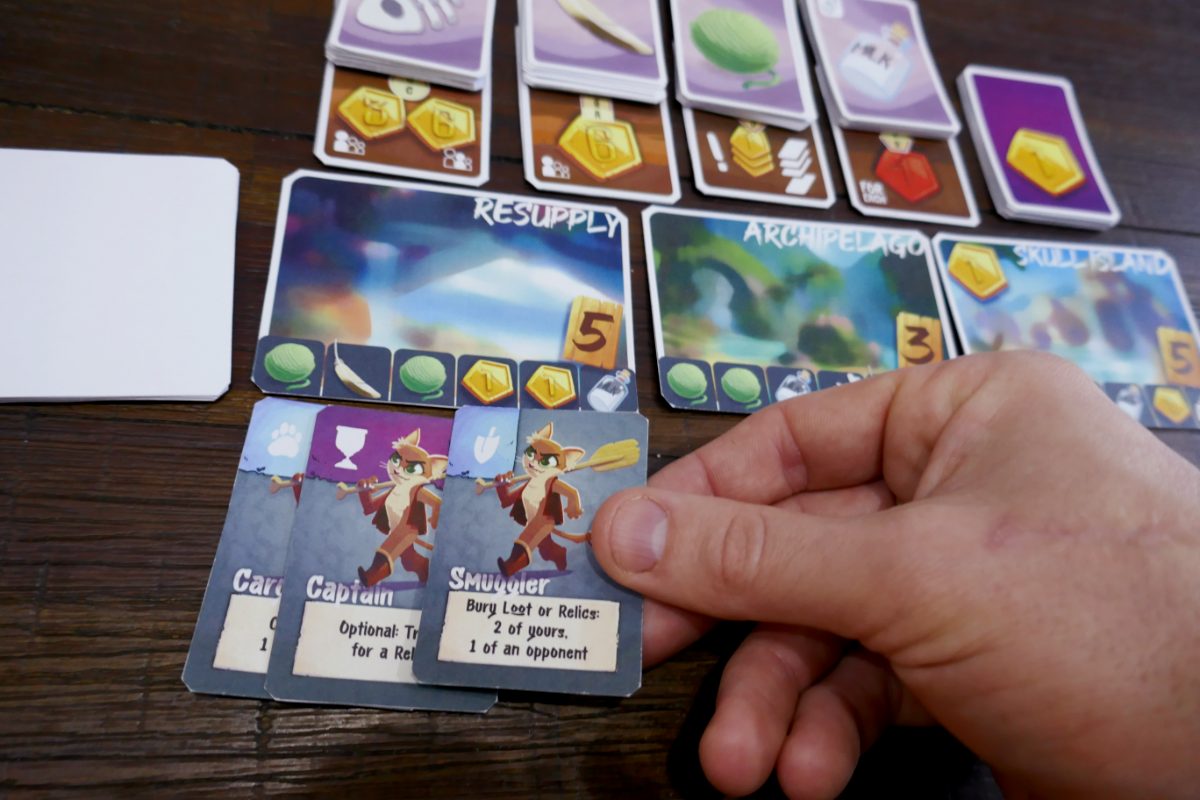
Send your crew of feline freebooters to gather the greatest hoard of treasure ever seen across the nine seas. Keep it in your cargo hold in hopes of exchanging it for gold, or bury it to keep it safe from your enemies theiving paws. Cats Burying Loot is a hand management game where 2-4 players are assigning crew members to different missions. Each mission will give rewards to crew members based on the order they were played, but crew members have abilities that may impact what they (and their opponents) receive. Once gained, sets of treasure can be traded for large end-game points, however treasure can also be stolen by your opponents. So, to keep your hoard safe, some crew members allow you to bury treasure by flipping it face-down into a seperate pile. Each player will check this buried treasure pile, and score points based on which player has the most of each type of treasure. Variable scoring conditions keep each game fresh and interesting.
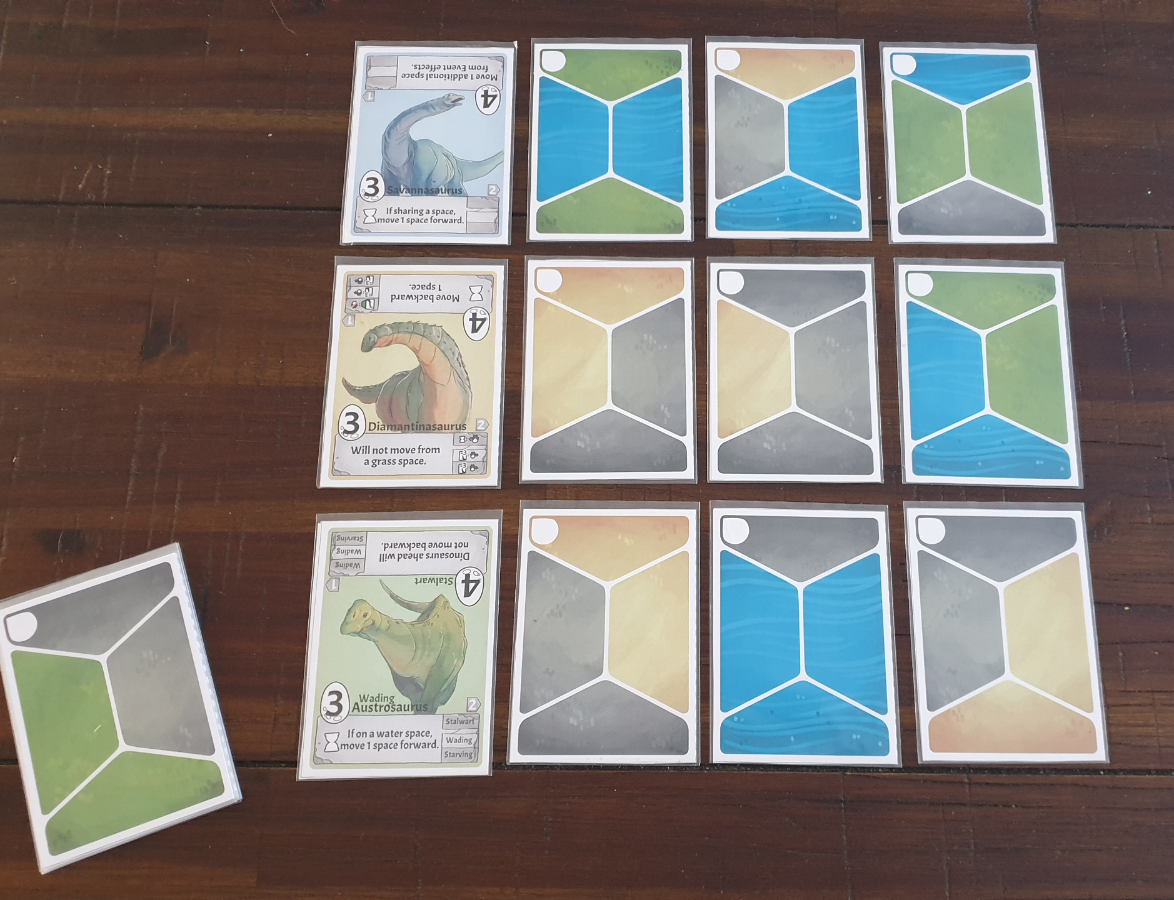
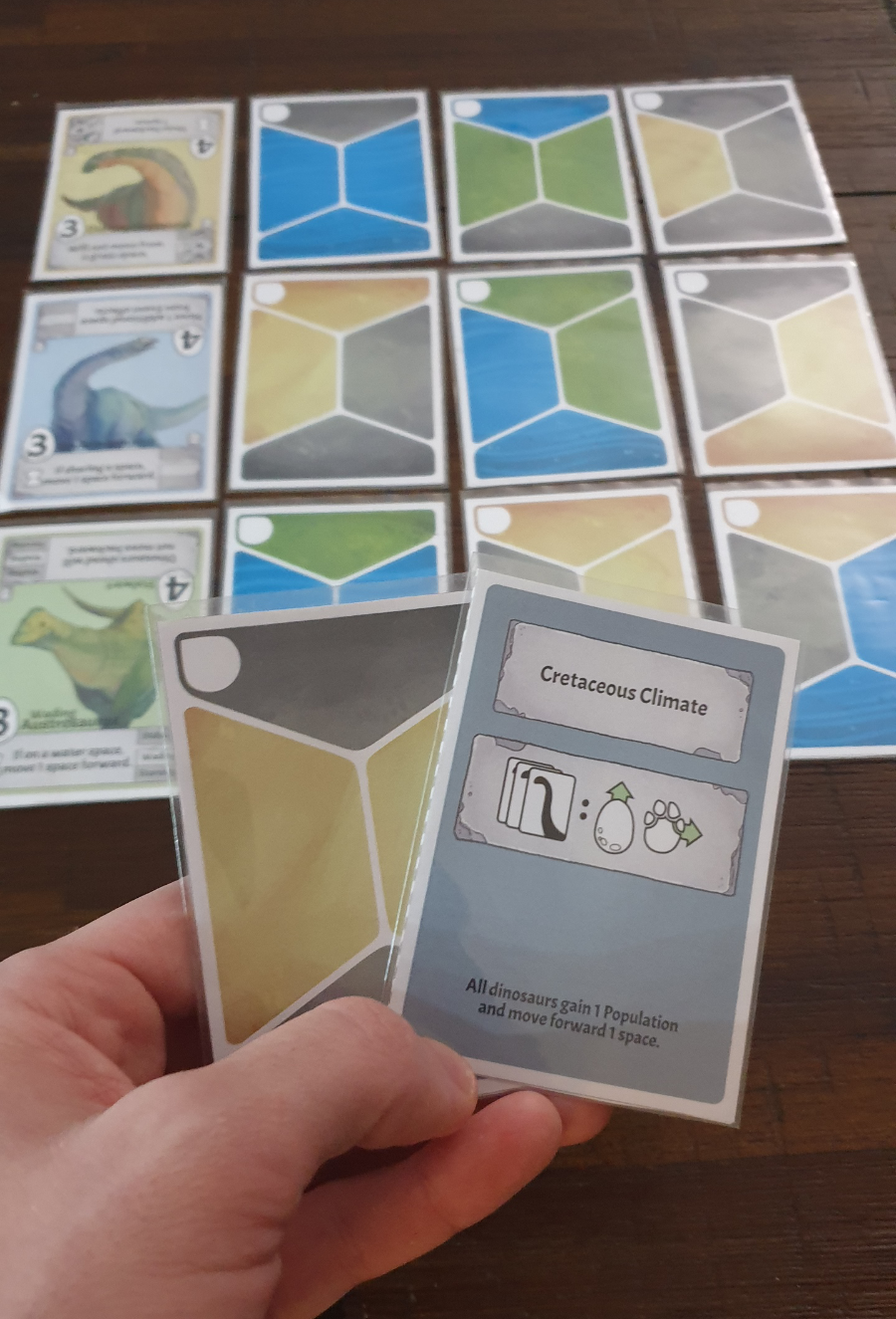
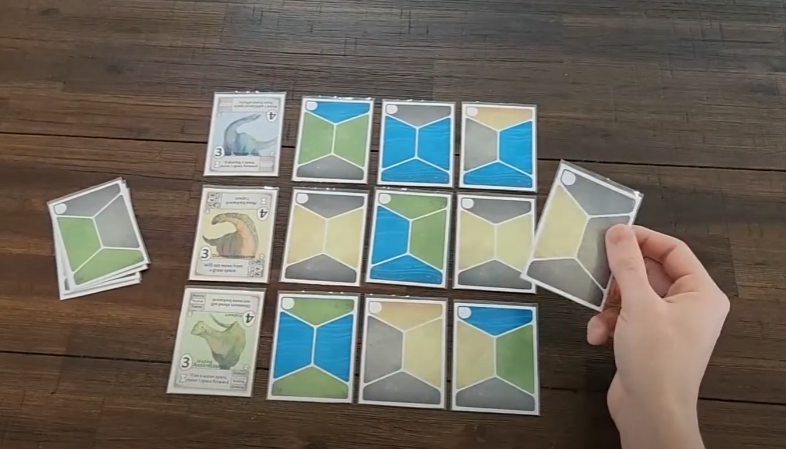
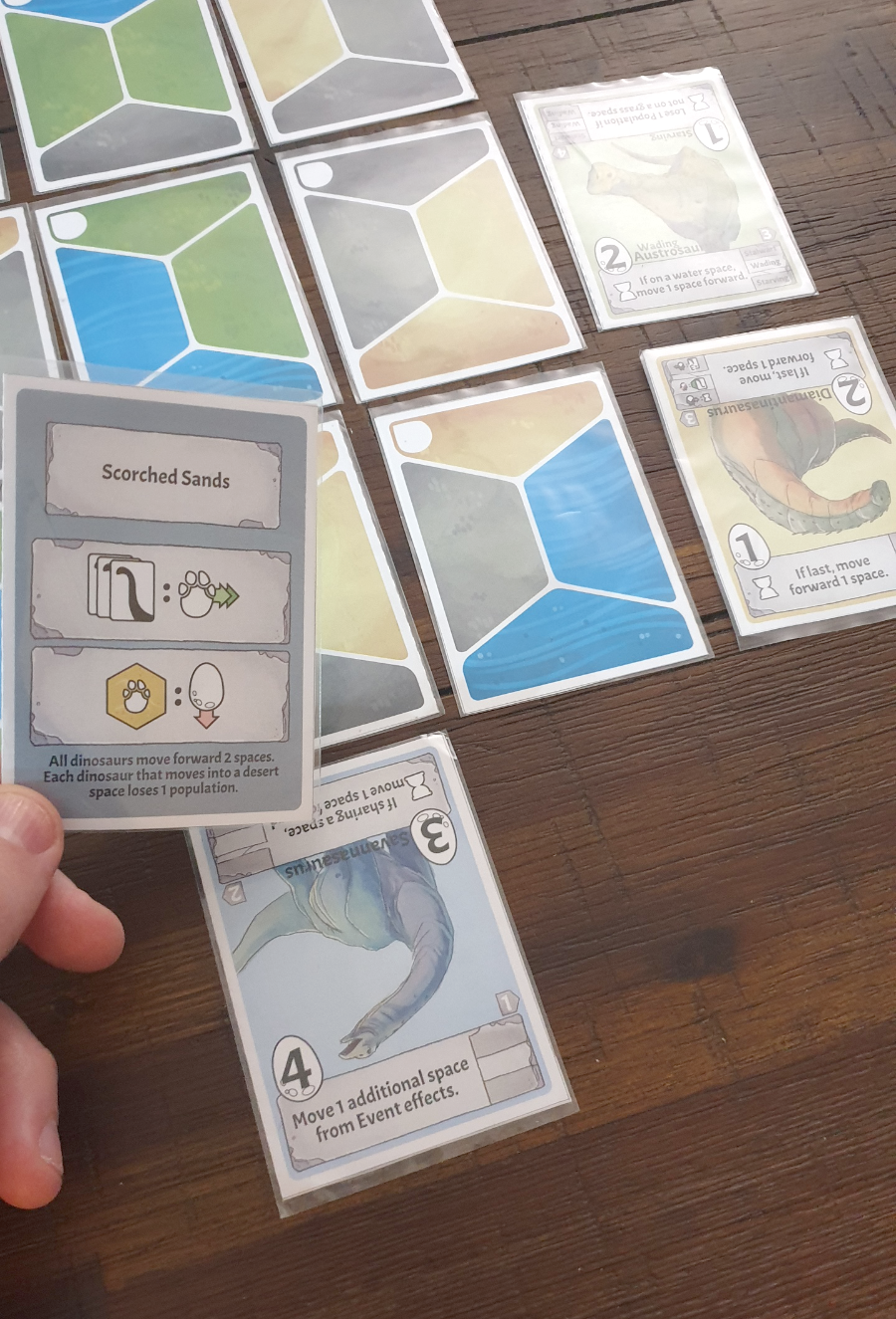
In this family-friendly cooperative game, one or more players shepherd a flock of cretaceous-era sauropods on a migration from South America to Australia. On a turn, you will draw 2 cards. One must be played face up for the event, and one face down to represent the landscape changing over time. The event will usually allow for one or more of the herds to move forward, but may also require the herds to lose population. If a herd ever reaches 0 population, the game is over. If a herd fails to reach the end of the trek within 10 turns, the game is over.
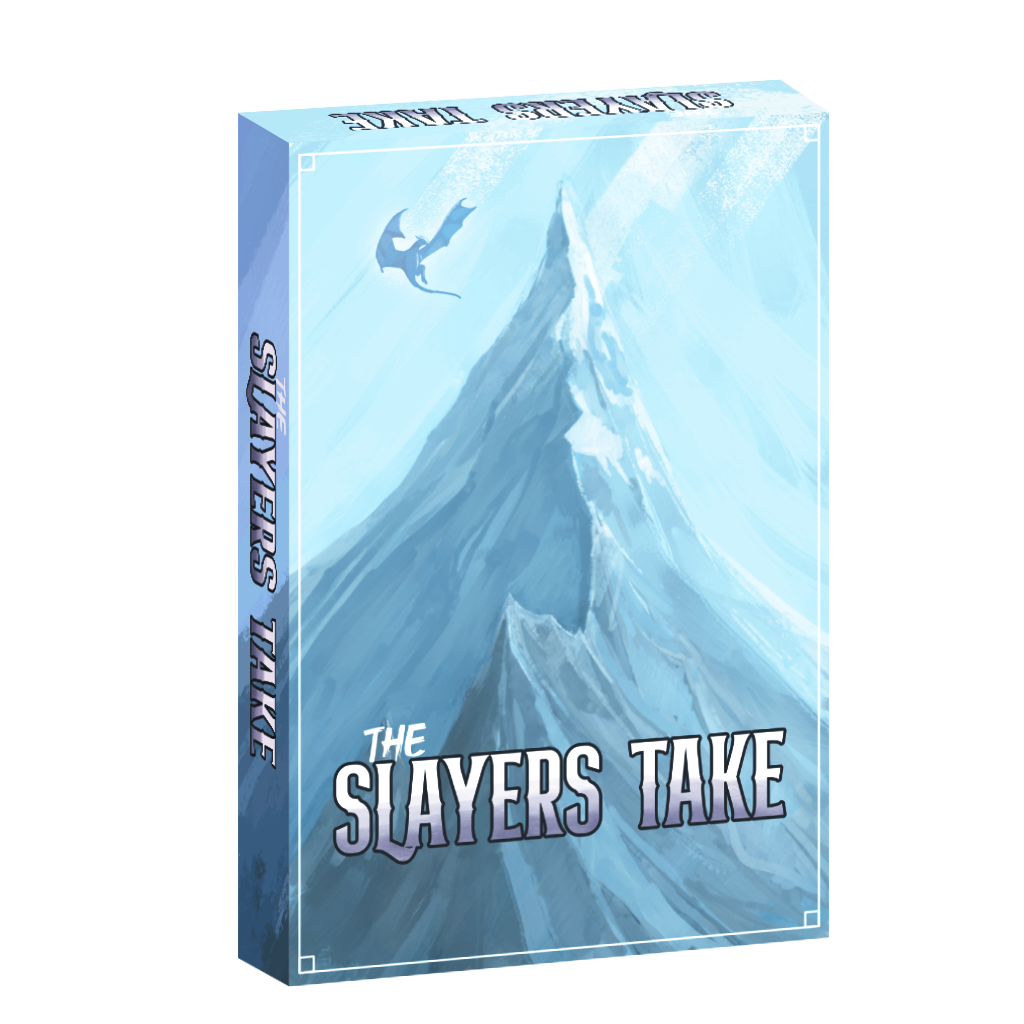
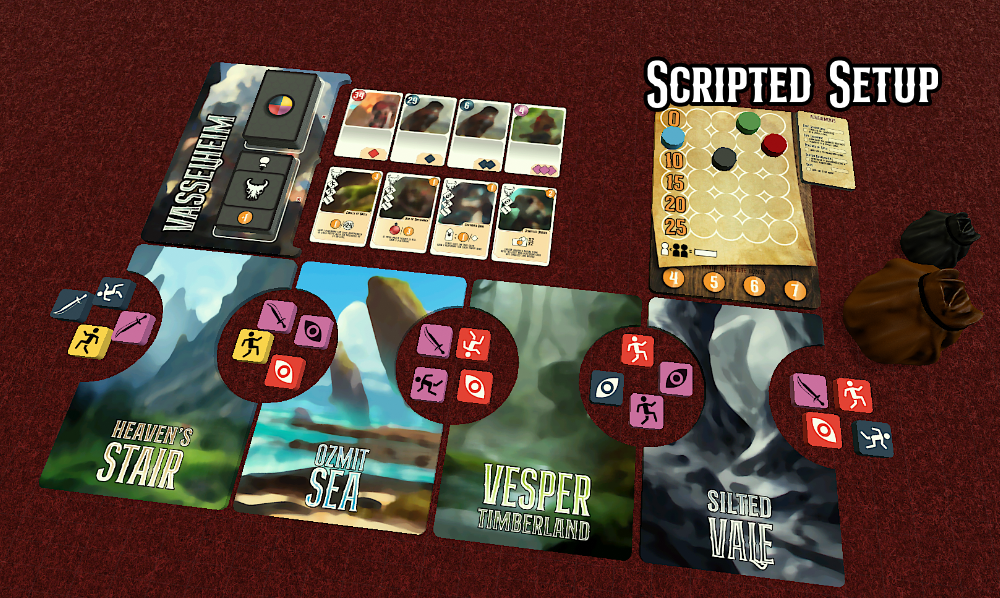
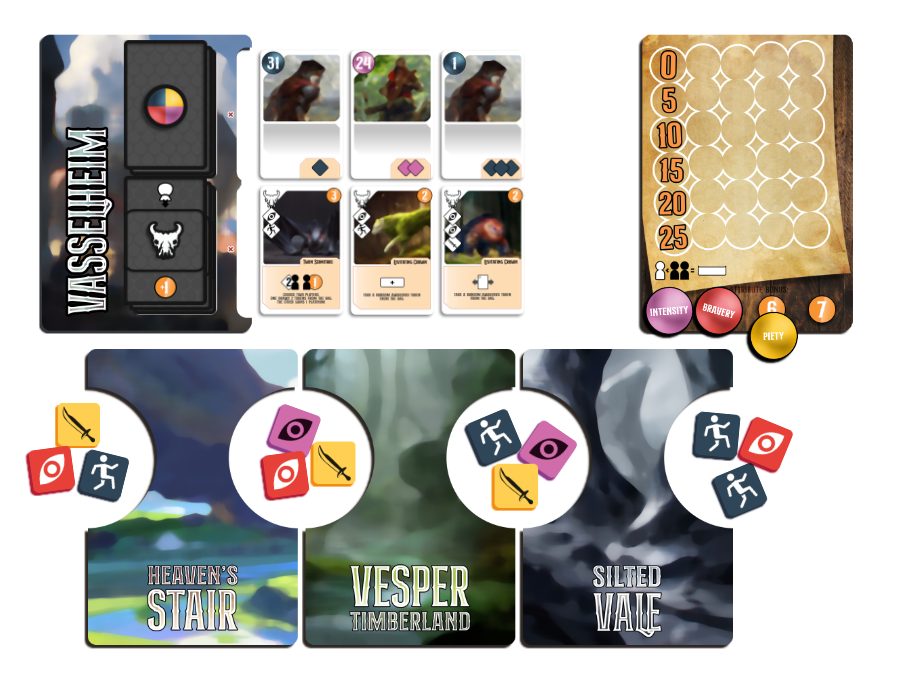
The Slayer's Take contains a unique spin on token drafting, tableau building, and engine building. In the game, players control a guild of bounty hunters, represented by adventurer cards. These cards are multipurpose: each one not only dictates turn order, but also determines the cost to activate magic items (point scoring effects) later in the game. The earlier you go in turn order, the more expensive your magic items become. During the game, you will also be drafting tokens to spend on defeating bounties and activating your magic items; to do so, you will choose a location in the middle of the table, and take up to four tokens from both sides of the location - as long as all tokens taken match in either colour or symbol. Over the course of the game players will build up a thrumming engine and execute satisfying multi-chain combos. The Slayer's Take was originally designed for and pitched to Darrington Press, with themes borrowed from the Critical Role live-play show. I am planning on re-tooling the design for a more general audience.
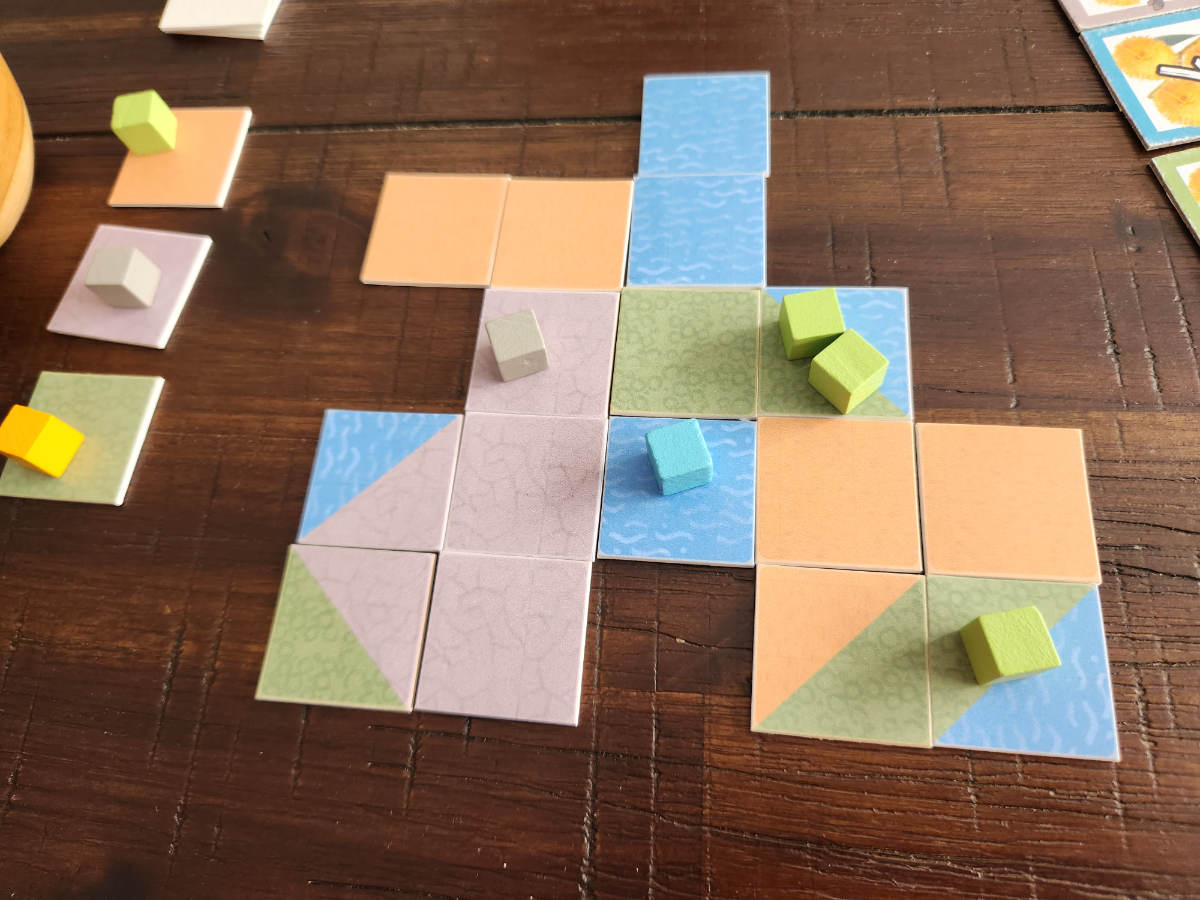
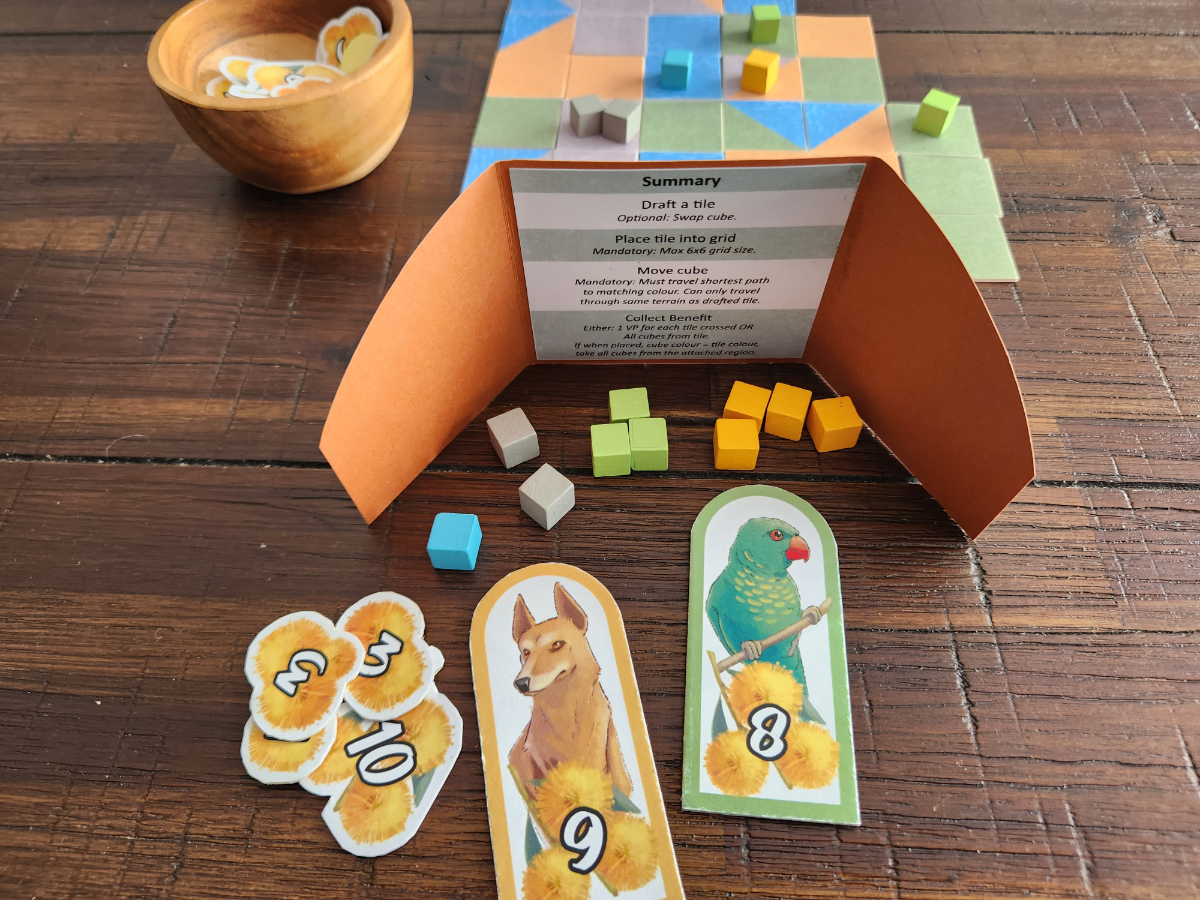
Kuranda Scramble is a light weight abstract strategy game for 2 players. On your turn, you draft a tile and animal pair, optionally swapping the animal with one from behind your screen. Then you place the tile somewhere in the 6x6 grid, scoring a point for each tile the animal has to cross to return to it's preferred habitat. Alternatively, you can forgo those points to instead collect all animals on the tile it landed on. At the end of the game, each animal will score you bonus points if you have the most of that type behind your screen.
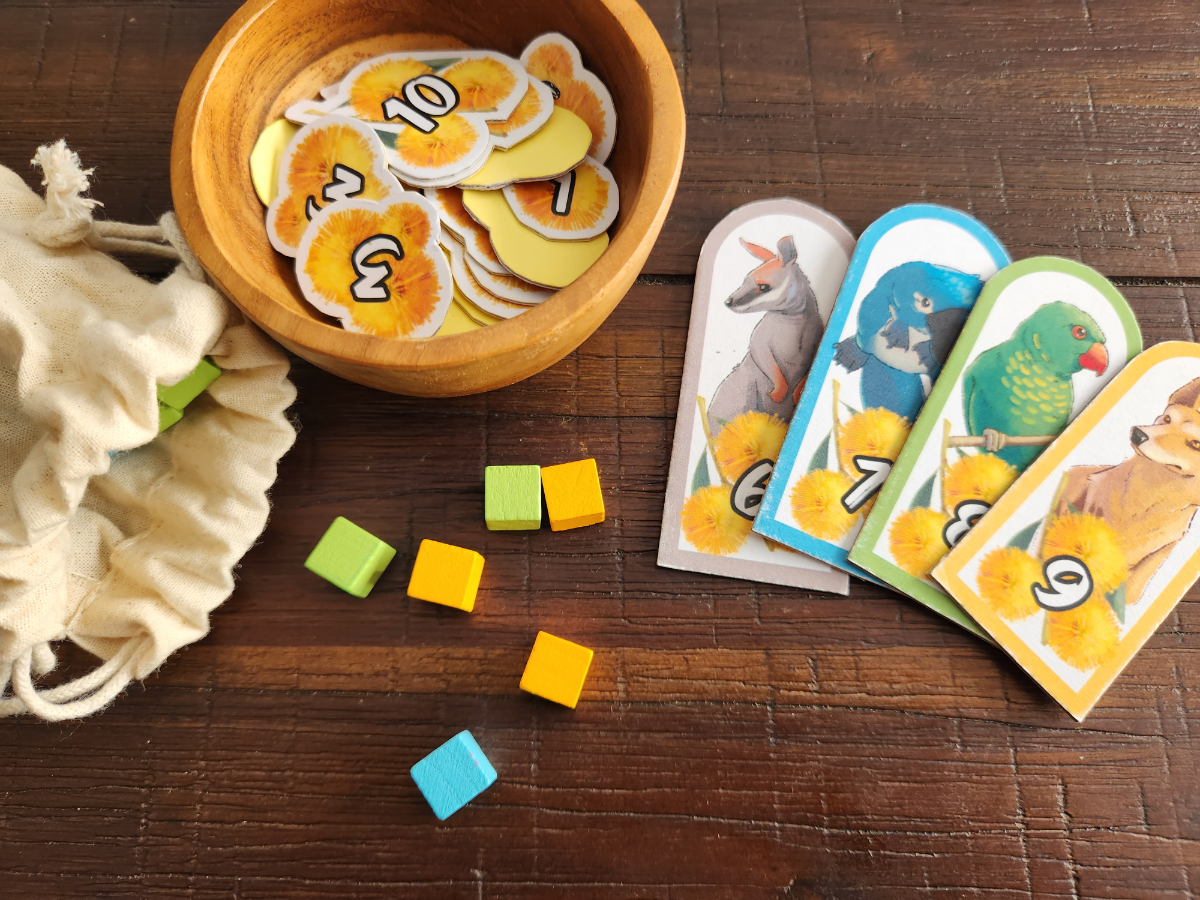
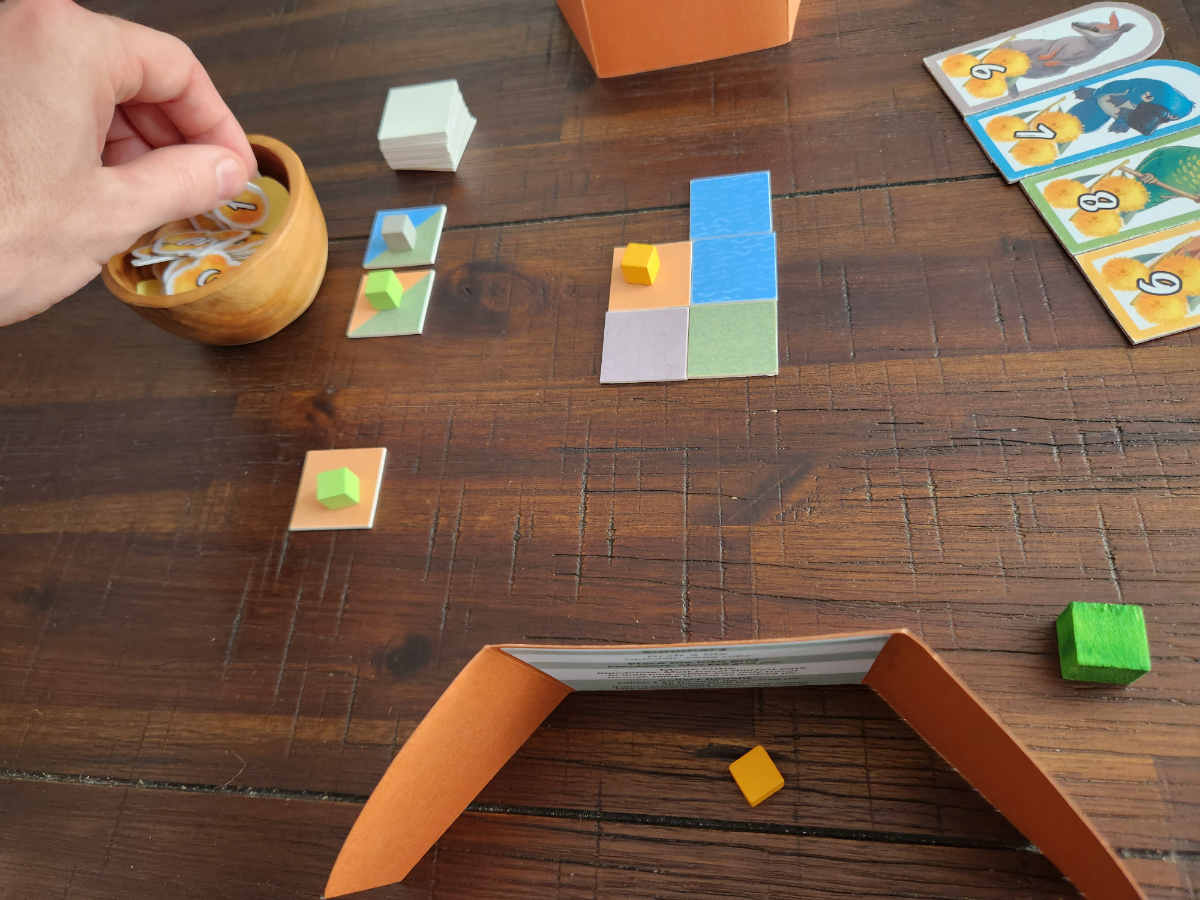
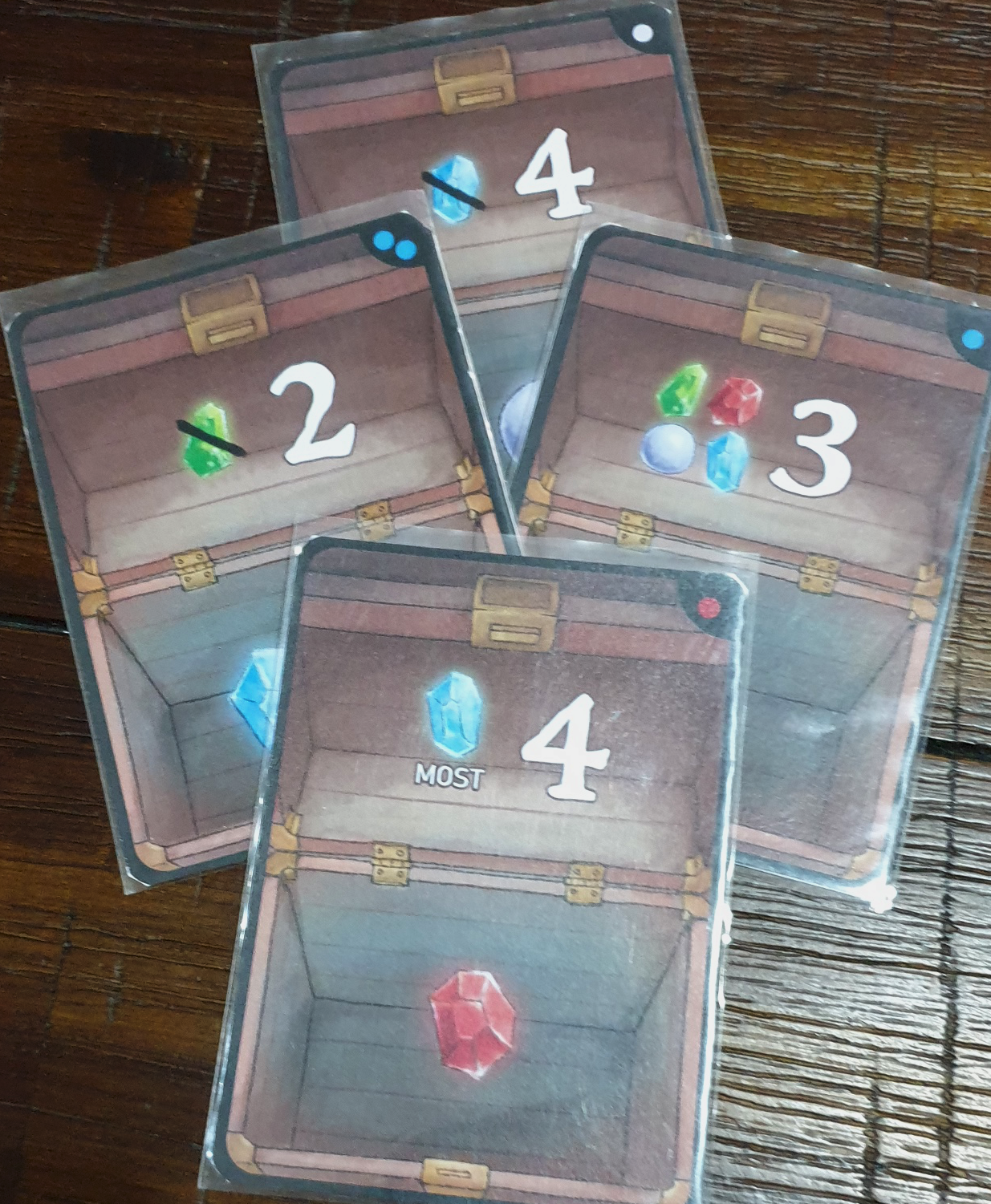
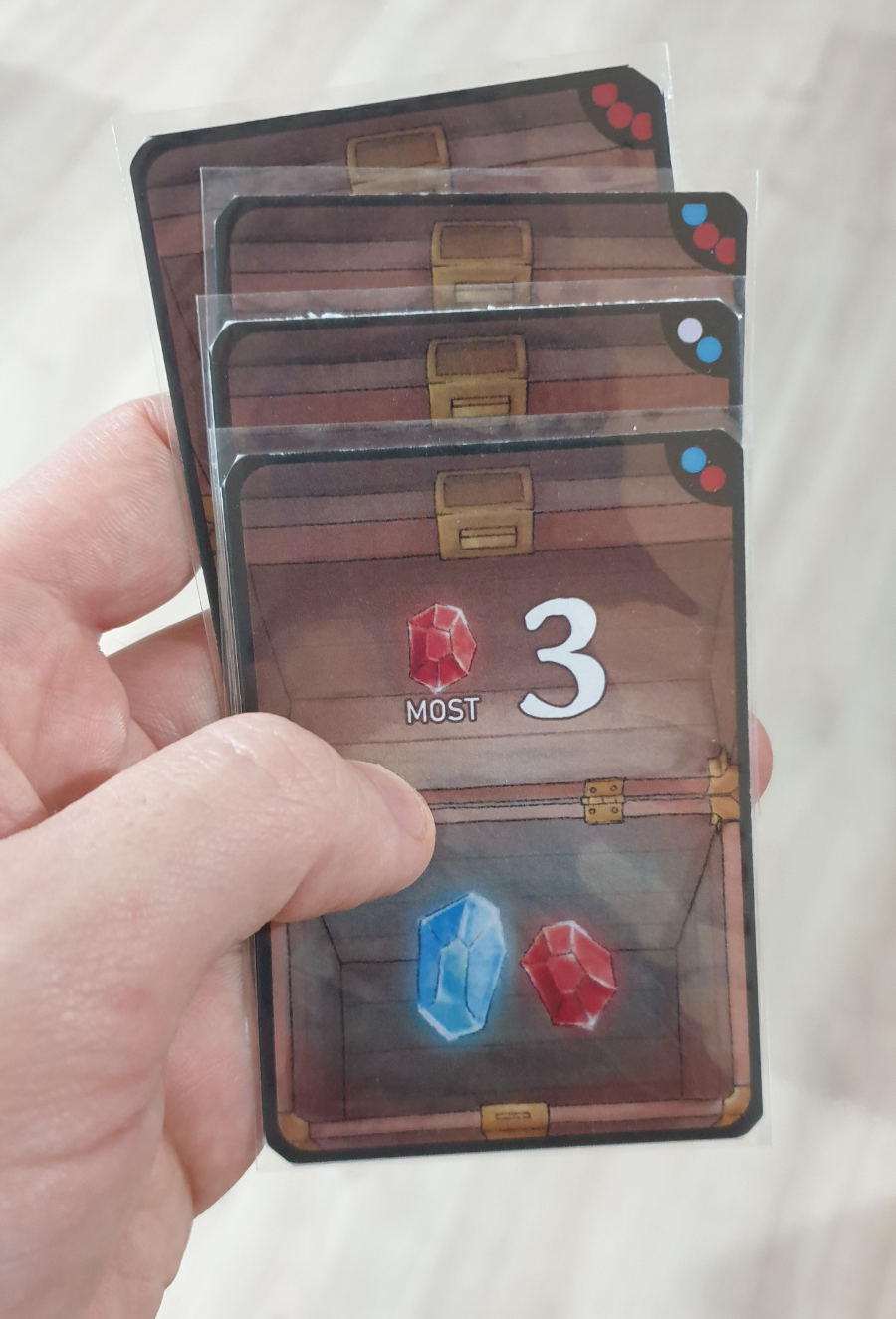
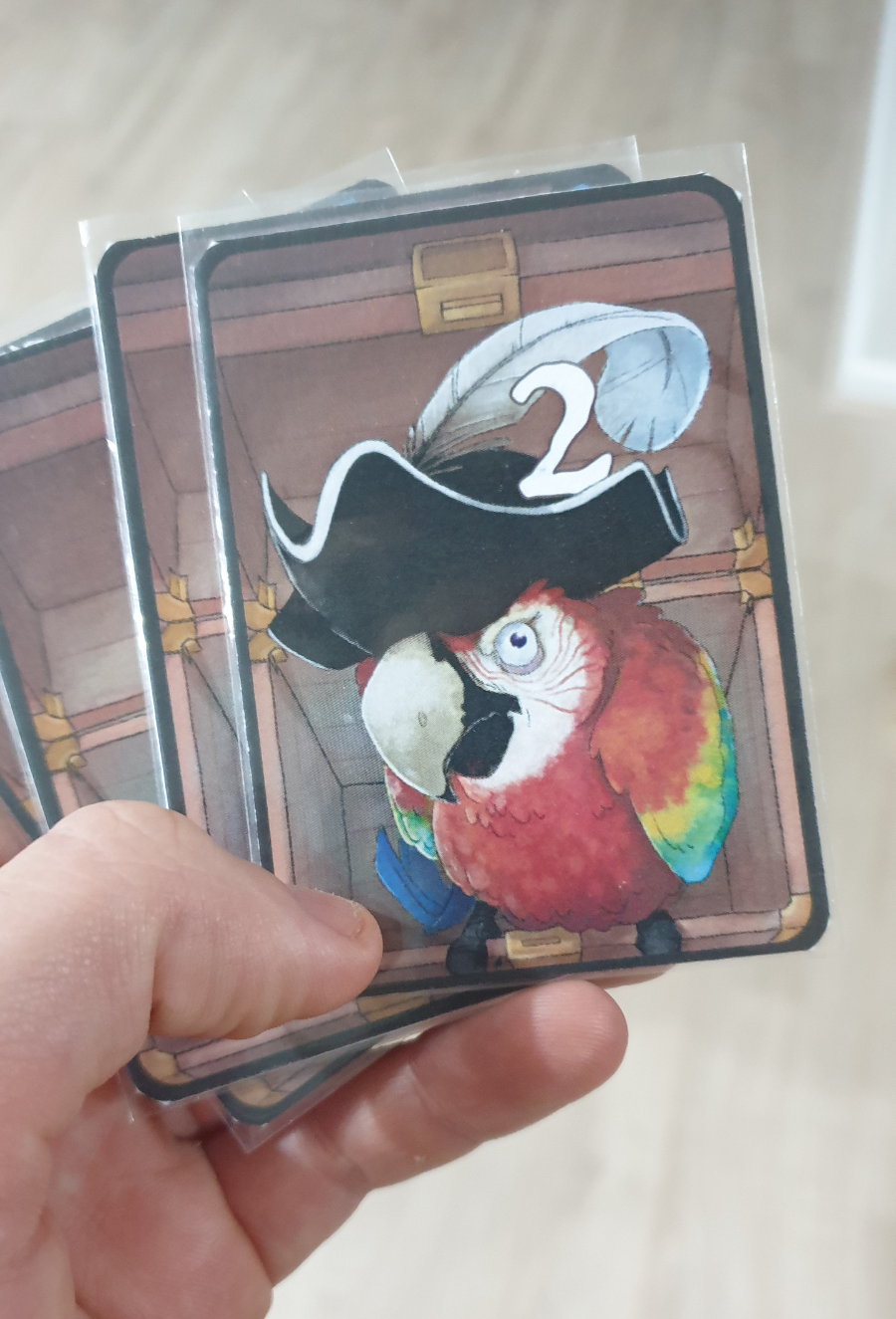
The Captains Parrot was designed for one of the ButtonShy 18 Card contests. The design restriction being that the game can be played standing up, without any table surface at all. In the game, players are deck hands loading chests of gems and gold onto a pirate ship under the watchful eye of the Captains Parrot. The goal of the game is to collect a hand of cards that scores you the most points. Each card is a treasure chest that contains several gems and a scoring condition. The game takes place over several rounds, during which one of the players will always be counting down from 10, as a timer for the round. If a player fails to select a set of cards before the timer runs out, the Parrot has spotted them, and they panic and drop one of the chests by flipping one of their cards face down. The game is simple and fast paced, and emphasizes quick processing and decision making skills.
Bower is a competitive 2 player, pick-up and deliver game with engine building upgrades and push-your-luck scoring elements. Gameplay revolves around strategic pathfinding and turn optimisation. On your turn, your opponent will first populate the forest with berries and trinkets using the seed deck. You may then alter the paths through the forest by rotating the 7 central tiles, before moving your Bowerbird along its current path, collecting the trinkets you pass over. If you can return your bowerbird to the nest, you score points depending on the number of trinkets it returned with. You also earn a powerful crest to enhance your future turns. The player with the most points from their bower and personal goal cards is the winner. Bower was originally designed for the Board Game Geek 2019 Two player Print and Play Game Design Contest, where it came 8th overall, and achieved 4th for best date night game.


Tumblebee is a 20 minute solo/multiplayer competitive puzzle. 2 dice are rolled, and players choose one result to use as a movement, and the other becomes a pollination value. Players move their bee around the board, attempting to encircle spaces with fully pollenated flowers to score points. The more your bee has moved, the more points a space is worth, but you can never return to a space you have previously visited. Because of this, the strategy for scoring big points is to maneuver around, pollinating all the flowers around a particular space and only then landing inside of it once you are certain you can pollinate all adjacent flowers.
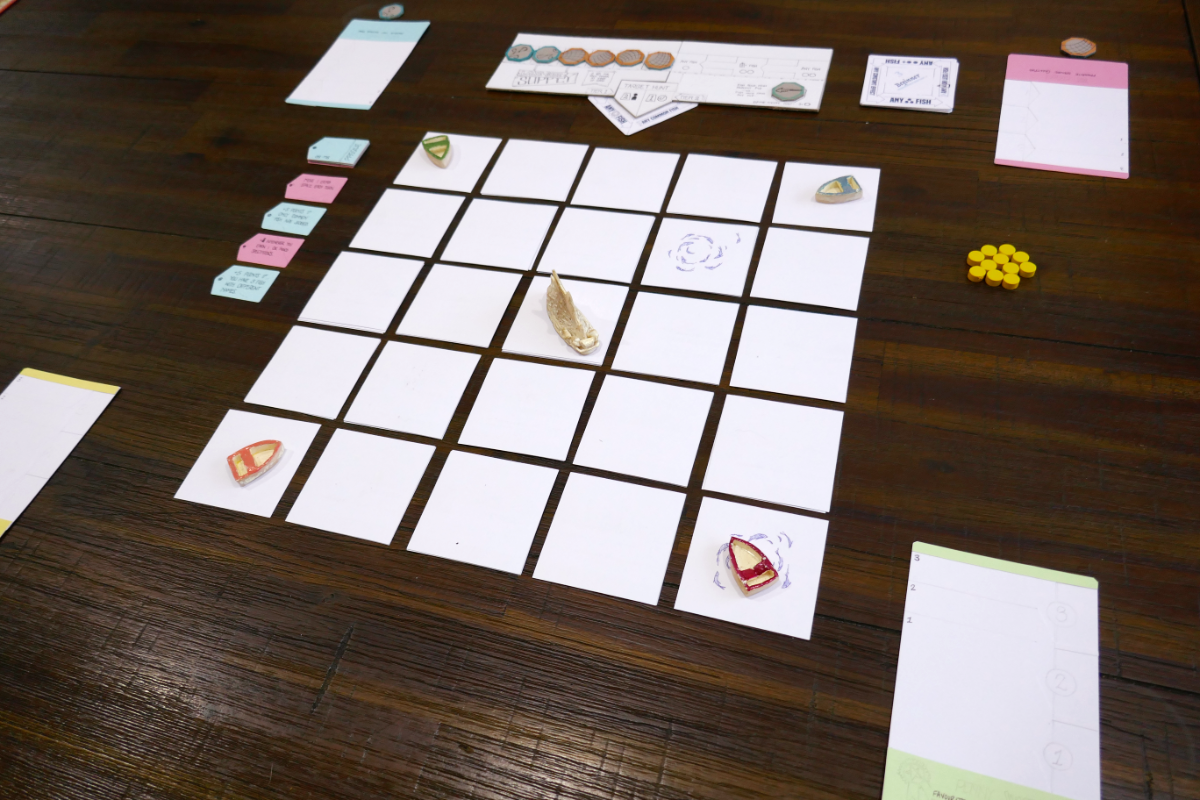
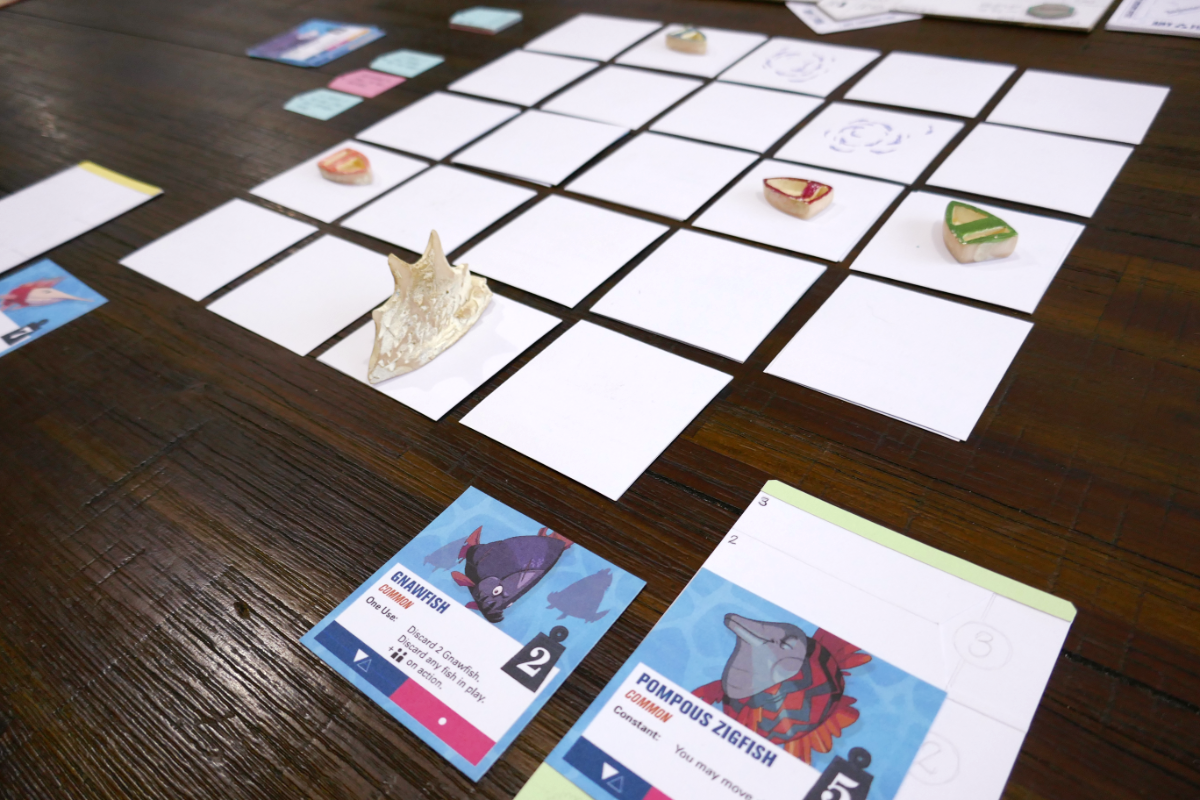
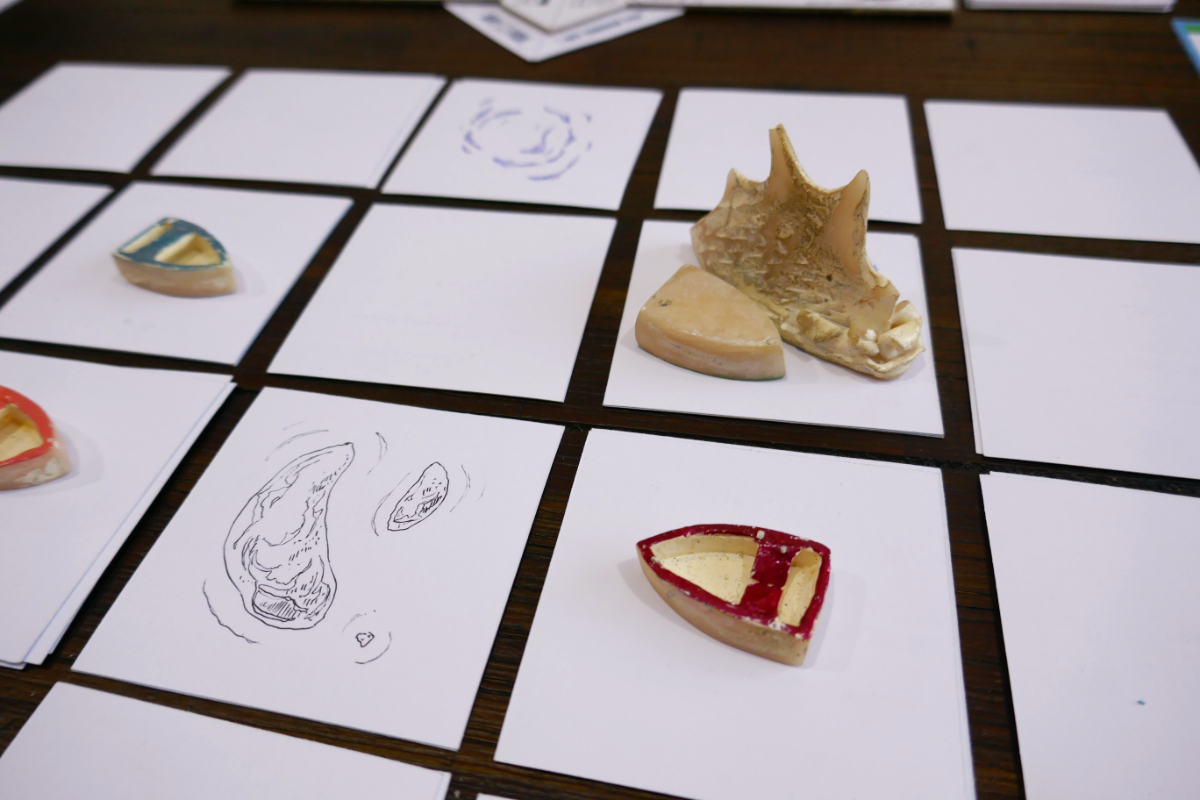
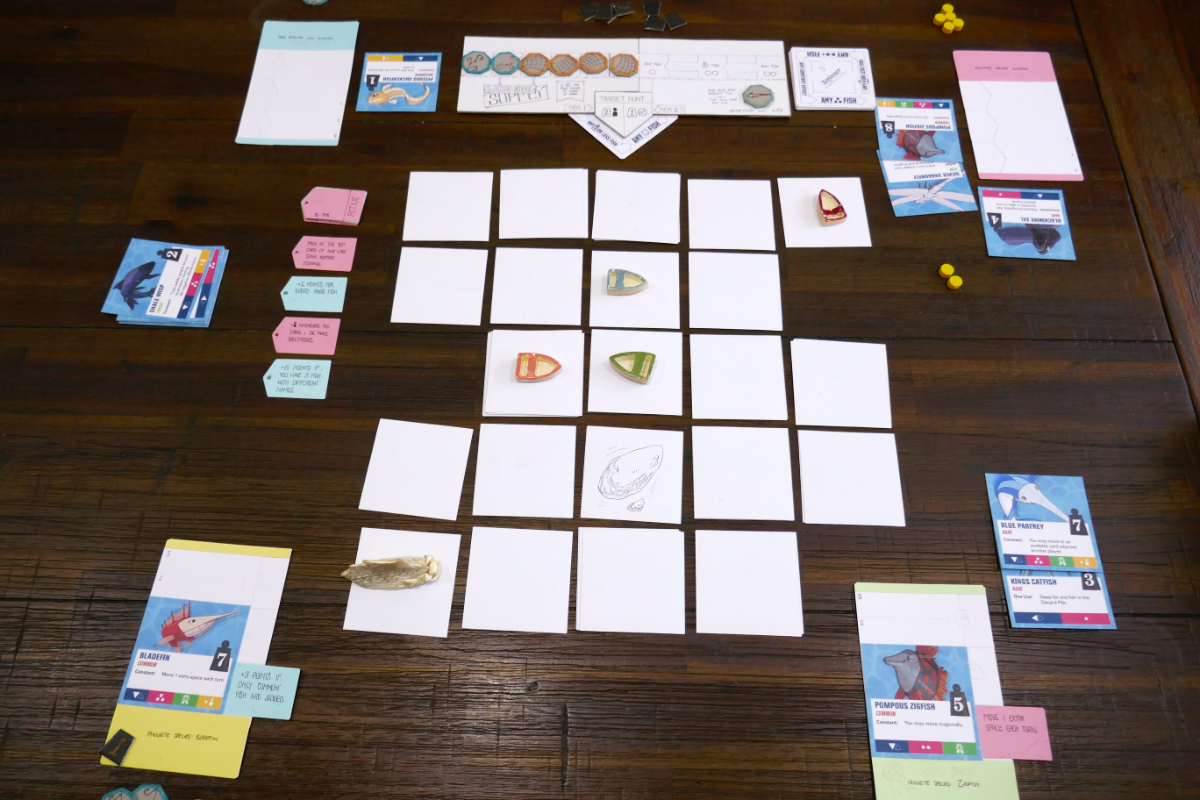
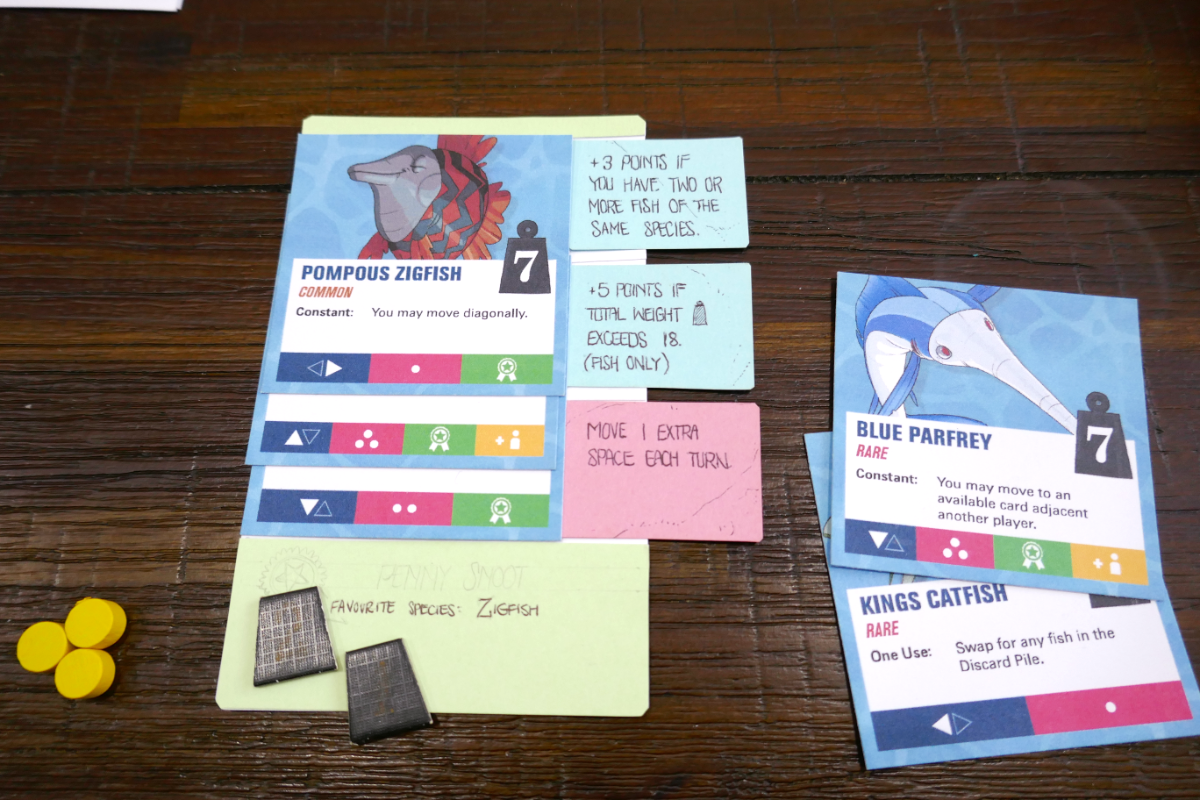
In this fast paced competitive game, players are participants in a fishing tournament. During the game, you will move around a slowly-shrinking lake, collecting fish from the water to trade for points, valuable supplies, or to hand over to the judges as part of your final catch. Each fish has unique abilities that can be utilised at various points. To make matters more complicated, there is a huge leviathon that patrols the waters, sinking any boat it runs across. Strategically maneuver between rocks and other players boats to avoid its jaws, all the while trying to impress the swarm of spectators watching from the shore.
In this short and sharp game, players take on the role of a wedding photographer for a party of farm animals. Use card drafting to gather together as many attendees as you can, carefully dividing them into suitable sets as indicated by scoring polaroids. You can also add to those sets with other cards to claim camera tokens, which have a random number of points on the back and are only revealed at the end of the game. However, you can sacrifice the potential points and trade your camera tokens for more drafting actions at any stage of your turn.